Crane-Assisted Tree Removal Starts With the Ground Beneath the Setup Area
A practical guide to planning a crane setup for tree removal in New Hampshire's Lakes Region, with clear advice on what to consider and how to plan the next.
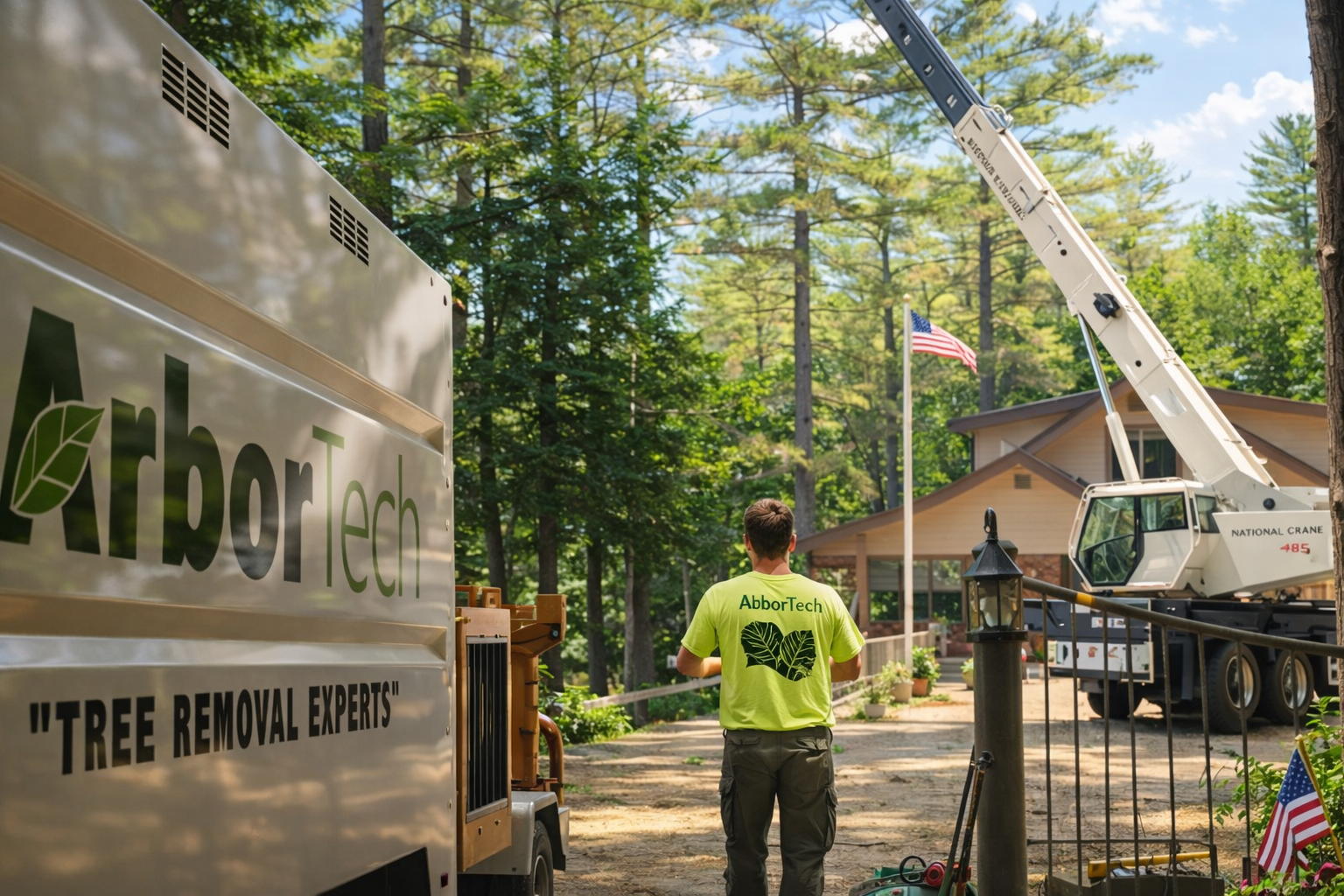
There is no single answer for every property when it comes to planning a crane setup for tree removal. The right approach depends on what is already there, what has changed, and what matters most in daily use. Lakes Region properties often combine slopes, narrow drives, shoreline limits, and mature trees in the same work area. That local context is useful, but the conditions at your property or workplace still guide the recommendation.
What This Can Look Like
Tree care decisions should consider the whole tree and the property around it. Reviewing soil bearing and slope, underground utilities, and driveway construction helps connect the visible concern with access, structure, targets, and the work required to complete the job safely. The same limb or defect can carry different importance depending on its location and what sits beneath or beside it.
Planning the work also means discussing overhead clearance, outrigger space, and debris landing and hauling route. Those details can change the equipment, rigging, cleanup, timing, or follow-up needed on the property. They are not side notes when access is limited or weather can change quickly. A clear plan for moving people, equipment, and debris is part of completing tree work well.
A common shortcut is focusing on the tree canopy while overlooking where the crane and support equipment must safely stand. It can sound reasonable because it gives the conversation one simple answer, but it may not reflect the way your property is actually used. Looking at the full situation first can confirm that the simple option is enough when it truly fits. It can also prevent money and time from being spent on a change that does not address the original concern.
What You Can Do Now
Take one photo of the whole tree and another of the specific concern from a safe location. Include nearby roofs, walks, driveways, or play areas so the setting is clear. You do not need a formal report. A few clear notes or photos related to soil bearing and slope, underground utilities, and driveway construction can make the first conversation far more useful.
Access can be just as important as the condition itself. If stored items, furniture, landscaping, tenant schedules, building rules, or another project affect the area, mention that before the tree inspection. It gives us a realistic plan for reaching the work and helps avoid a return visit that was needed only because an important area was unavailable. When reviewing planning a crane setup for tree removal, keep any follow-up tied to a clear change involving debris landing and hauling route.
Ultimately, you are deciding whether the proposed setup protects the property and provides a controlled path for each section of the tree. One option may address the immediate need, while another may coordinate work that would be harder to revisit later. The better choice depends on your priorities, timing, and how long you expect the current setup to remain in use. The explanation should make those tradeoffs clear without assuming the larger option is automatically the right one.
If the explanation starts to feel too technical, bring it back to three points: what is happening around soil bearing and slope, what role underground utilities plays, and what you will need to know about debris landing and hauling route later. Clear answers to those questions are usually enough to understand the plan.
Sometimes the most useful finding is that one part of the tree and surrounding site is not contributing to the concern. That can remove an unnecessary step and make the remaining recommendation easier to understand. Helpful service should reduce uncertainty, not create a new worry around every component or area.
When you contact us about planning a crane setup for tree removal, we start by listening to what you have noticed and what you want to improve. From there, we look at the related conditions and explain the next step in plain language. If something cannot be confirmed during the initial tree inspection, we will say so. You should come away knowing what we recommend, why it fits, and what happens next.
The goal is not to collect every possible concern around the tree. It is to understand the few details that matter for planning a crane setup for tree removal and make a comfortable decision from there. A good result should make sense in everyday use, not only sound convincing in a proposal or service explanation.
Need a Lakes Region tree visit?
Send photos and notes, then request an estimate. We will explain what we can confirm and what comes next.