How to Hire a Tree Removal Company You Can Trust
Hiring a tree company gets real the moment a truck backs into your driveway and somebody starts unloading saws, ropes, and a chipper. At that point, a bad choice is not just inconvenient, it can...
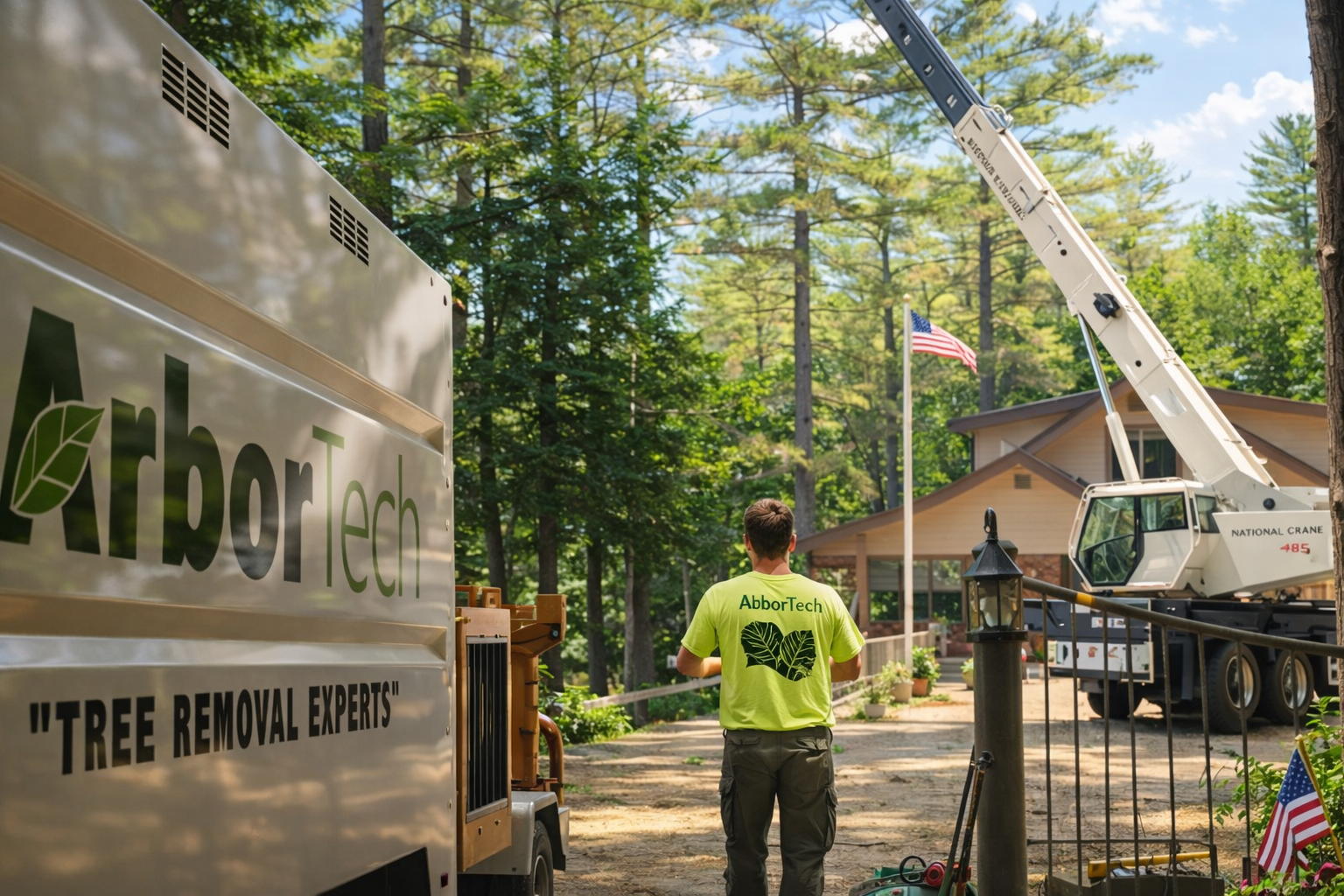
Hiring a tree company gets real the moment a truck backs into your driveway and somebody starts unloading saws, ropes, and a chipper. At that point, a bad choice is not just inconvenient, it can turn into property damage, injury claims, neighbor problems, and a bill that keeps growing. The smartest way to hire is to look past the sales pitch and focus on proof, especially tree service insurance, clear scope, and signs that the company knows exactly what kind of job your property needs.
Start with the risk, not the saw
Tree work looks straightforward from the ground. Cut the tree, haul the limbs, grind the stump, done.
But the real risk sits in everything around the tree. Your roof. Your fence. Your driveway. Your sprinkler lines. The power line near the back corner. The neighbor's garage six feet beyond the property line. Once somebody is climbing, rigging, or dropping heavy wood, small mistakes stop being small.
That is why trust should start with evidence, not personality. A friendly crew, a quick quote, and a promise to "take care of it" are not enough. You want a company that communicates clearly, documents the scope, and can show current tree service insurance before work begins. Price matters, of course, but the cheapest quote is often cheap because something is missing. Usually insurance, cleanup, protection, training, or all four.
If you remember one thing, remember this: the point is not just getting a tree cut down. The point is getting the job done without creating a second problem in your yard, your budget, or your liability.
Know what kind of company you actually need
A lot of hiring mistakes happen before the first phone call. You assume "tree service" is one thing, but it covers several very different jobs. If you hire the wrong kind of crew, you can end up with rough cuts on a healthy tree, a removal quote for a tree that could be saved, or an emergency crew trying to do detailed pruning like it is storm cleanup.
Tree removal vs. pruning vs. arborist care
Tree removal is the full takedown of a tree, usually followed by cutting the trunk into sections and hauling debris away. Sometimes stump grinding is included, sometimes it is not. Removal work is about access, rigging, safety, equipment, and controlled falling or lowering.
Pruning is selective cutting to improve structure, clearance, safety, or appearance. Good pruning is precise. It is not random trimming to make a tree look smaller. If you want healthier growth, fewer broken limbs, or branches kept away from a roof, pruning standards matter more than brute force.
Arborist care is broader. An arborist evaluates tree health, structure, disease, decay, pests, root issues, and overall risk. If a tree looks stressed, leans oddly, drops bark, has mushrooms around the base, or suddenly thins out in midsummer, you may need diagnosis before you need removal. The same goes for mature trees that add value and shade. Once a healthy tree is cut badly, you do not get a do-over.
The hiring checklist changes with the job. For removal, focus heavily on insurance, hazard experience, equipment, and site protection. For pruning or tree health, put more weight on arborist credentials and adherence to pruning standards. For a tree that could affect a structure or liability, you want both.
Residential, commercial, and emergency crews
A backyard maple behind a privacy fence is one kind of problem. An HOA common area lined with parked cars is another. A split oak blocking your driveway at 7:10 a.m. after a storm is something else entirely.
Residential work usually centers on access, property protection, cleanup, and neighbor impact. Can equipment get through a gate? Will lawn damage be minimized? Will wood stay or go? Will the crew protect flower beds, irrigation, and fencing?
Commercial jobs add more layers. You may need documented insurance limits, certificates sent to a property manager, traffic flow planning, tenant communication, and a tighter schedule. A commercial crew should be comfortable with paperwork, not just chainsaws.
Emergency crews need speed, but not sloppiness. Storm work often involves hanging limbs, unstable trunks, soaked soil, and blocked access. That is exactly when shortcuts get expensive. Fast response matters, but proof still matters more.
Make sure tree service insurance is real and current
This is the section that saves you the most trouble.
A verbal "yes, insured" means almost nothing. Plenty of uninsured operators say it anyway. Some had coverage last year. Some carry one policy but not the one that matters. Some use subcontractors who are not covered. Some show an old certificate that expired months ago.
Insurance needs to be current, specific, and tied to the business doing the work on your property. If a company hesitates to provide proof, move on.
General liability insurance
General liability insurance helps cover damage the company causes to your property or somebody else's property during the job. Think broken windows, crushed gutters, damaged siding, cracked driveways, torn fencing, or a limb through your neighbor's shed.
Without it, you are left arguing with a contractor who may not have the money to fix what got damaged. With it, there is at least a formal path for a claim. According to the U.S. Small Business Administration's overview of business insurance, liability coverage is designed to help protect against claims involving bodily injury or property damage. In tree work, that is not some distant possibility. It is part of the risk profile every day.
Ask for proof of general liability coverage before scheduling. Not after. Not the morning of the job.
Workers’ compensation insurance
Workers' compensation covers injuries to workers on the job. If somebody falls, gets struck by wood, or is hurt handling equipment on your property, this is the policy that should respond.
Why does that matter to you? Because uninsured labor can become your problem fast. Rules vary by state, but if a company uses workers without proper coverage, injury disputes can get messy and expensive. The U.S. Department of Labor explains workers' compensation as a system that provides benefits to employees who suffer job-related injuries or illnesses. For a high-risk trade like tree work, that protection is not optional in any practical sense.
This matters even more if a company uses day labor or subcontractors. You do not want vague answers here. You want a clear statement that every person on the job is covered.
Bonding, licensing, and local requirements
Bonding is not the same as insurance. Licensing is not the same as insurance. People mix these up all the time.
Insurance covers certain losses and claims. A bond is more like a financial guarantee tied to specific obligations. Licensing means the business meets local or state requirements to operate, if such requirements exist. Some places regulate tree contractors heavily. Some barely regulate them at all. Permit rules can also vary by city, county, HOA, or conservation district.
That means you should never assume a company is "good to go" just because it has a business card and a pickup. Check local requirements directly through your city or county. The SBA's licensing and permits guide is a useful reminder that business rules differ by location and industry.
How to verify a certificate of insurance
Getting a certificate of insurance sounds formal, but the process is simple.
Ask for the certificate before work begins. Then check a few basic details. The business name on the certificate should match the name on the estimate and invoice. Policy dates should cover the day of your job, not last spring. Coverage types should include general liability, and for any crew with employees, workers' compensation. The insurer name should be listed clearly.
Most important, make sure the policy is active right now. If you want to be extra careful, call the insurance agent or carrier listed on the certificate and verify status. That one phone call can save a massive headache.
If subcontractors will be used, ask for proof that those subcontractors are insured too. This is a common trap in tree work and construction trades. A company may be insured, but the extra crew brought in for the big removal may not be.
Check qualifications beyond insurance
Insurance is the floor, not the ceiling. A fully insured crew can still do poor work.
You also want signs that the company understands tree biology, safe cutting, rigging, and job planning. Trustworthy companies tend to explain the work in plain language, point out likely risks, and make specific plans for access and cleanup. Vague confidence is cheap. Useful detail is not.
ISA certified arborist and other credentials
ISA stands for International Society of Arboriculture. An ISA Certified Arborist has passed an exam and meets experience requirements in areas like tree biology, diagnosis, pruning, installation, and safety. You can verify credentials through the ISA credential verification tool. That credential matters most when your job involves pruning, tree health, risk assessment, or preserving a valuable mature tree.
If your only goal is removing a dead ornamental tree in an open front yard, ISA certification may not be the deciding factor. But if a company is advising whether a large oak can be saved, how much canopy to remove, or how to reduce risk without ruining the tree, certification matters a lot more.
Other qualifications can matter too, especially for utility-adjacent work, crane removals, or pesticide applications. The trick is matching the skill set to the job.
Experience with your kind of job
Tree work is full of categories that look similar from the curb and feel completely different on site. A 20-foot backyard tree with open drop space is one thing. A decayed pine leaning over a garage with limited access is another.
Ask about experience with your exact headache. Have jobs been done in tight drop zones? With crane access over a house? Around septic systems? Near power lines? On steep lots? With diseased or brittle wood that behaves unpredictably? Around protected trees that require careful pruning instead of aggressive cutting?
A good answer sounds specific. It mentions process, equipment, or planning. A weak answer sounds like, "Yeah, no problem, done tons of these." That is not the same thing.
Read reviews the smart way
Reviews help, but only if you read them like clues instead of scores.
A perfect five-star page does not prove much by itself. Neither does one angry one-star review. What matters is the pattern. Use Google, Yelp, Angi, Facebook, neighborhood groups, and referrals from landscapers or property managers, but look for repeated details, not just star averages.
What good reviews actually tell you
Strong reviews usually mention the same handful of things. The crew showed up when promised. The quote matched the final bill. The jobsite was cleaned well. The property was protected. Communication was clear when weather caused delays. Gates were closed, ruts were minimized, and the driveway did not end up full of sawdust for three days.
Those details matter because they are hard to fake at scale. If multiple people mention careful cleanup and accurate billing, that is useful. If somebody says the crew laid plywood before driving over a soft lawn and left the place cleaner than expected, that tells you more than "great job."
Red flags in bad reviews
Bad reviews are useful when they repeat the same issue. Surprise charges. No-shows. Damage disputes. Delayed callbacks after a deposit. Sloppy pruning. Promised cleanup that somehow became "not included." Hostile responses from the owner. Those are patterns worth respecting.
One complaint about timing during storm season is not shocking. Ten complaints about disappearing after partial payment is a different story.
Also look at how the business responds. A calm, specific reply is a good sign. Blame-shifting, insults, or vague defensiveness usually point to bigger problems.
Ask for a written estimate that leaves no wiggle room
This is where a good hiring process starts to feel concrete.
A trustworthy estimate should let you compare bids without guessing. If one company writes two detailed pages and another writes "remove tree, clean up, a wide range that reflects tree size, access, equipment, and risk" that is not an apples-to-apples comparison. That is one professional quote and one gamble.
Scope of work
The estimate should identify exactly what is included. Which tree or trees? Entire removal or selected limbs? Is stump grinding part of the job or extra? How deep will the stump be ground? Are roots included? Is brush haul-away included? Will logs stay for firewood or be removed?
Access should be described too. If the crew plans to use a bucket truck, mini skid steer, crane, or manual climbing, that should not be a surprise on job day. If a fence panel needs to come out temporarily, or if the only access runs through a side yard, put it in writing.
Specificity protects you. It also protects the contractor, which is usually a good sign.
Cleanup and site protection
Cleanup is where vague estimates often fall apart.
You want clear language about debris removal, raking, blowing sawdust, and what happens to wood chips. If heavy equipment will cross the lawn, ask whether plywood mats or another protection method will be used. If you have irrigation lines, landscape lighting, flower beds, retaining walls, or delicate pavers, make sure those are discussed before work begins.
If the ground is wet and rutting is likely, ask how that will be handled. Maybe the company reschedules. Maybe lighter equipment is used. Maybe access changes. What you do not want is a shrug after the damage is done.
Timeline, price, and payment terms
The estimate should state the total price, any deposit required, the expected start window, and when final payment is due. For larger or more complex jobs, a progress payment structure may make sense. For straightforward residential jobs, full payment is often due at completion.
Be cautious if a company demands a large cash deposit before scheduling, especially after a storm. "Cash only" is not always shady, but it should make you slow down and look closer. So should prices that change verbally, vague overtime claims, or statements like "we'll figure the rest out once we're in there."
Good companies know how to write down what they are promising.
Compare bids without falling for the cheapest one
The lowest tree bid is often the most expensive mistake. That is a direct rule worth keeping.
Price tells you something, but only after you know what is included, how the work will be done, and what happens if something goes wrong. A low quote can look great until you realize it excludes stump grinding, haul-away, property protection, permit handling, or actual insurance.
Why one quote can be much lower than the rest
There are only so many ways for a bid to be dramatically cheaper. The company may be uninsured or underinsured. Cleanup may be minimal. Labor may be subcontracted without proper coverage. Equipment may be limited, which can turn a one-day job into a messy multi-day one. Or the company may simply be planning to cut corners.
Sometimes a low bid leaves out hidden complexity. No mention of traffic control near a street tree. No plan for protecting a shared driveway. No allowance for crane access. No permit research. No disposal fee.
If one quote is 30 percent lower than the others, do not celebrate yet. Find out what vanished.
What a fair tree removal price usually reflects
Tree pricing is driven by risk and logistics more than by cutting time alone. Size matters, of course, but location matters just as much. A medium tree over open lawn can be simpler than a smaller tree boxed in by a roof, fence, and utility line.
Price also reflects access for equipment, need for climbing or rigging, haul-away distance, stump grinding, permit requirements, traffic management, emergency timing, and wood condition. Dead, storm-damaged, or brittle trees can take longer and require more caution. So can trees growing through decks, wrapped into other canopies, or rooted near retaining walls.
A fair quote usually reflects a plan, not just a number.
Spot red flags before the truck pulls in
Some warning signs deserve immediate no.
You do not have to overthink every small thing, but certain behaviors almost always point to a company you do not want on your property.
Door-to-door storm chasers and pressure tactics
After storms, neighborhoods fill with urgency. That is exactly when pressure sellers show up. "Your tree is dangerous, your insurance will make you remove it, and you need to sign today for the neighborhood discount." No.
Door-to-door crews sometimes do legitimate work, but high-pressure storm pitches are a classic setup for sloppy jobs, inflated bills, or disappearing acts. If somebody pushes hard for same-day commitment without written proof, step back.
Real urgency does not cancel basic diligence.
No paperwork, no address, no insurance proof
A professional tree company should have more than a phone number and a handwritten quote. You want a real business name, physical address, current insurance certificate, and written estimate. Missing basics matter more than charm.
A cheap number scribbled on the back of a card can turn into a very expensive afternoon. If a company cannot produce paperwork before the job, expect trouble after the job.
Topping, unsafe practices, and casual shortcuts
Topping is the aggressive cutting back of major limbs or the upper crown of a tree, often done to reduce height quickly. It is widely considered harmful in most situations because it creates weak regrowth, decay risk, and ugly structure. The ISA's consumer guidance on tree topping explains why it damages long-term tree health.
Unsafe practices are another hard stop. No helmets. No hearing or eye protection. Improper climbing gear. Casual chainsaw handling. Parking heavy equipment carelessly on soft ground or near underground systems. Those are not small style differences. They are signals.
If the shortcuts are visible before work starts, assume there are more you cannot see.
Ask these questions before you hire
A short question list can keep you from forgetting the obvious when a crew is standing in your yard at 8:15 a.m. and everything feels rushed. You do not need an interrogation. You just need clean answers.
Questions about insurance and liability
Ask for a current certificate of insurance. Confirm that general liability and workers' compensation are both in place. Ask whether everybody on site is covered, including any subcontractors. Ask what happens if a fence, roof, driveway, or neighboring structure is damaged.
Pay attention to how the answer sounds. Clear and routine is good. Defensive and vague is not.
Questions about permits, utilities, and neighbors
Ask whether permits are required and who handles them. Ask how property lines will be confirmed if a tree sits near a boundary. Ask whether underground utility locating is needed before stump work or heavy equipment access. If a tree is near a street, ask about traffic control. If limbs extend over a neighboring yard, ask how notice will be handled.
The right company should already be thinking about these things.
Questions about cleanup and follow-up
Ask whether stump grinding is included, whether wood stays or goes, and how fine the final cleanup will be. Ask what happens if weather causes delay or if the job reveals more damage than expected. Ask whether lawn ruts, fence panel removal, or minor access repairs are addressed.
The goal is not to trap anybody. The goal is to remove assumptions.
Understand permits, protected trees, and utility issues
Tree work is not always just a private agreement between you and a contractor. Local rules can slow a job, reshape the scope, or stop removal entirely.
That can be frustrating, but it is much better to learn it before a crew shows up with a crane.
When a permit may be required
Many cities and counties regulate tree removal, especially for large mature trees, street trees, heritage trees, or protected species. HOAs may have approval rules too. Coastal zones, conservation areas, and commercial properties often come with extra layers.
Some places require permits based on trunk diameter. Some regulate only certain species. Some protect trees near sidewalks or public rights-of-way. If your contractor shrugs this off without checking, that is not reassuring. Your local planning, forestry, or public works department is the place to confirm rules.
Power lines and utility coordination
If branches are near energized utility lines, this is not routine trimming. Utility coordination may be required, and in many situations only specially qualified line-clearance professionals should handle the work. The Occupational Safety and Health Administration's tree care safety guidance highlights electrical hazards as a major risk in arboricultural operations.
For underground concerns, stump grinding and equipment access can affect buried lines, irrigation, drainage, or septic components. Utility marking may be needed before digging or grinding. The easy phone call you skip is often the expensive repair you regret.
Choose based on your situation, not a generic “best company”
There is no universal best tree company. There is only the best fit for your job.
A company that shines at monthly commercial maintenance may not be the one you want for a storm-split pine over your roof. A fast removal crew may not be the best choice for careful ornamental pruning. Match the hire to the problem.
Best fit for routine trimming and maintenance
For ongoing pruning and maintenance, prioritize arborist knowledge, pruning standards, communication, and a long-term approach to tree health. You want somebody who can explain what should be cut, what should stay, and why.
This kind of work rewards precision. A cheaper crew that over-prunes can leave you with stressed trees, sunscald, weak regrowth, and a rough shape that takes years to correct.
Best fit for hazardous removals
For removals near roofs, fences, sheds, septic fields, driveways, or neighboring structures, prioritize hazard experience, insurance, rigging skill, and a detailed work plan. Ask how sections will be lowered, what equipment will be used, and how the site will be protected.
This is the category where bargain shopping goes wrong fastest.
Best fit for commercial and multi-property work
For commercial properties, HOAs, apartment sites, and multi-location work, documentation matters almost as much as cutting skill. Look for clean estimates, prompt certificates of insurance, scheduling discipline, traffic flow awareness, and communication that works with tenants, managers, or maintenance teams.
You want a company that treats paperwork as normal, not as a nuisance.
Best fit for post-storm emergency work
After a storm, move quickly but keep your standards. Prioritize immediate hazard reduction, current insurance proof, a clear temporary versus permanent scope, and realistic timing. Emergency work often starts with making the site safe, then returns later for full cleanup or final pruning.
That two-step approach is normal. Vague promises are not.
Common hiring mistakes that cost you later
Most expensive tree hiring mistakes are painfully ordinary.
Hiring on price alone is the big one. It feels efficient and often backfires. The second mistake is skipping insurance verification because the company "seems legit." The third is assuming cleanup, stump grinding, haul-away, and lawn protection are included when nobody actually wrote those things down.
Another common mistake is treating all tree companies as interchangeable. A pruning job is not a removal job. A diagnosis call is not storm cleanup. A commercial contract is not a backyard trim.
One more: ignoring the small warning signs because the crew can start tomorrow. Bad communication at the estimate stage rarely improves once a deposit is paid.
Your final hiring checklist
Before you say yes, slow the process down just enough to protect yourself. Get at least three written estimates if the situation allows. Verify tree service insurance, including general liability and workers' compensation, and make sure the certificate is current. Read reviews for patterns, not just stars. Confirm exactly what is included: removal, stump grinding, haul-away, cleanup, site protection, timing, and payment terms. Ask about permits, utilities, and subcontractors. Then ask one more question: what, specifically, could complicate this job on your property?
That last question tends to separate polished sales talk from real planning.
Try that before the next estimate, and the right company usually becomes much easier to spot.
Disclaimer: This article is for general informational purposes only. It is not professional advice, a quote, or a service agreement. Conditions at your home or property may differ; contact a qualified professional for an on-site evaluation before making repair, safety, or spending decisions.
Need a Lakes Region tree visit?
Send photos and notes, then request an estimate. We will explain what we can confirm and what comes next.