Checking Trees After Weeks of Wind and Storms
Several windy weeks in a row fatigue branches and root plates. A post-storm walk catches damage before it becomes a failure.
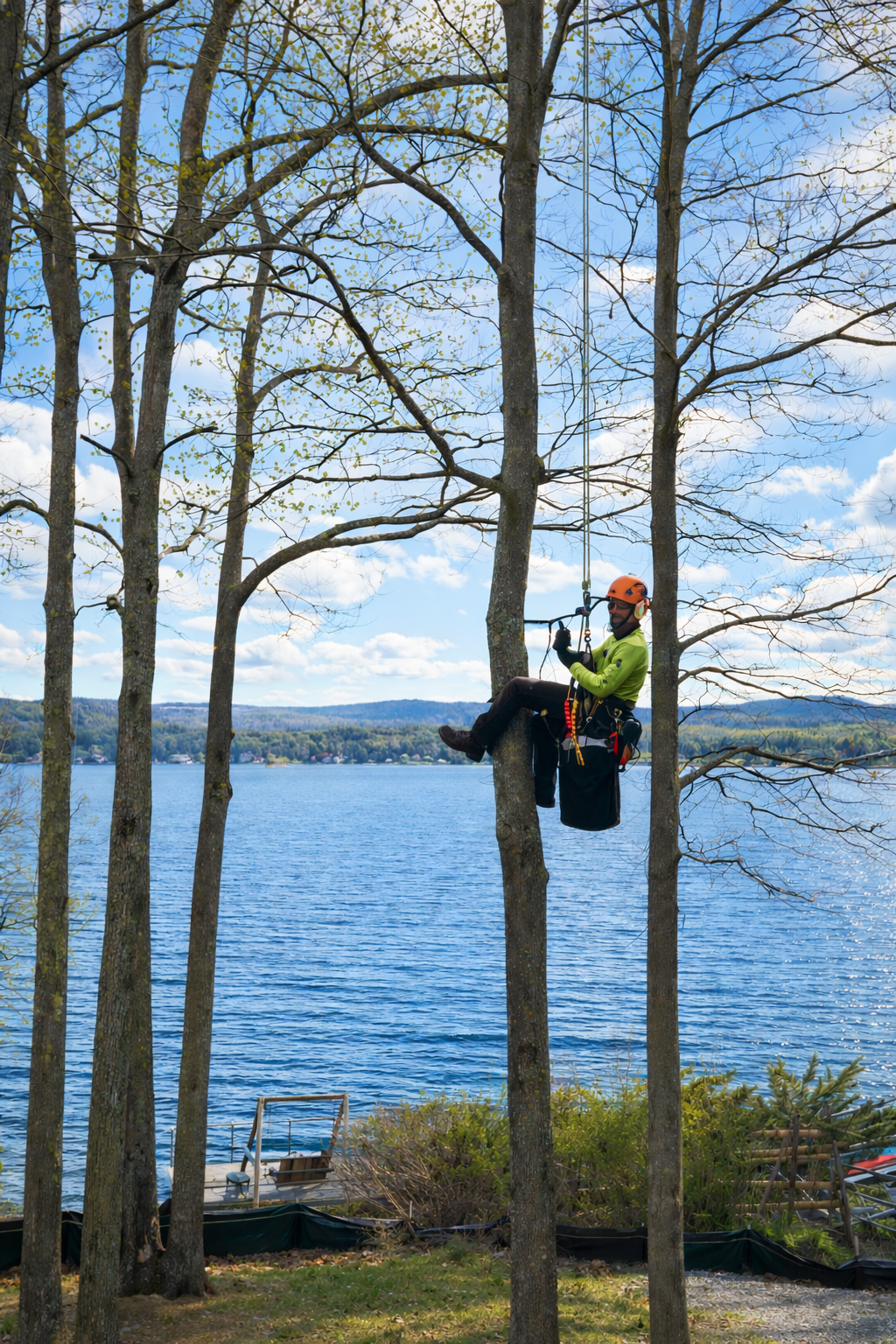
June weather in New Hampshire can deliver repeated thunderstorm lines and steady lake wind—not one dramatic event, but cumulative stress. Homeowners return from a week away and notice a branch hung up in the crown, bark split at a fork, or soil cracked on the uphill side of a lean. Those signs deserve attention before the next storm.
Sustained wind fatigues wood differently from a single gust. Weak unions that flex repeatedly may crack slowly. Root plates on saturated shoreline soil move incrementally until lean becomes obvious. A late-June check catches fatigue damage that a calm May walk missed entirely.
What to Look for After Wind
- Hangers and partially attached limbs in the upper crown
- Fresh cracks or sap at co-dominant unions
- New lean or soil heaving at the base
- Root plate uplift on waterfront trees after saturated soil and wind
- Branches lodged in the crown that changed position since your last look
Waterfront vs. Inland Trees
Shoreline trees face fetch and full sail described in our mid-May wind and lake shore wind articles. Inland yard trees still fail in thunderstorm downbursts—do not skip them in a post-wind walk because they are not on the water.
Compare crown symmetry to photos from early June. One-sided dieback or fresh lean toward a target means faster follow-up, especially over docks and driveways.
Do Not DIY Hung-Up Wood
Cutting hung-up limbs from the ground or a ladder requires professional training and rigging. Our crews handle removal and cleanup with appropriate equipment. See storm damage assessment and recovery for a fuller guide.
Document for Insurance and Planning
If damage hit structures or fences, photograph trees and impacts before cleanup for any insurance conversation. Then call for professional removal of unstable wood.
Date-stamped photos also help sequence non-emergency pruning when multiple trees on the lot show stress. Prioritize targets over structures and paths—consistent with our shoreline priority guide.
Next Steps After Assessment
Some trees need only deadwood removal; others need reduction pruning to lower sail; some require removal when unions or roots fail. Tight lake lots may need crane services for safe dismantling.
Pair storm checks with path and dock clearance articles if wind exposed conflicts you tolerated earlier—lakefront paths and dock rigging clearance. Contact us for storm response across Gilford, Meredith, Laconia, and Belknap County.
Trees that survived multiple June storm lines without obvious damage may still have hidden cracks at forks—photograph unions after each event and compare week to week rather than assuming silence means strength.
After Partial Failure
When one limb fails but the tree remains, inspect the union and remaining stems before assuming the rest of the crown is sound. Secondary failures sometimes follow days later when load redistributes unexpectedly.
Check guy wires, mooring posts, and fence lines near failed limbs—secondary damage to hardware sometimes indicates forces large enough to warrant full tree review beyond the broken branch alone.
Across Gilford, Meredith, Laconia, and other Belknap County communities we serve, the same seasonal pattern repeats: full leaves, lake wind, and crowded paths expose clearance and structure problems that looked minor in April. Professional pruning, shoreland-aware planning, and timely contact with photos keep small issues from becoming emergency removals when summer weather arrives.
Summary
Repeated June wind and storms fatigue branches and root plates without a single headline event. Walk the property for hangers, cracks, new lean, and lodged limbs, especially on waterfront lots with full sail. Do not cut major hung-up wood without training. Document damage for insurance when structures are involved. Professional assessment and cleanup before the next weather line keeps lake properties prepared through the rest of summer.
Storm Damage or Hanging Limbs on Your Property?
We provide storm assessment, cleanup, and emergency response across the Lakes Region.