Tree Removal Near Power Lines: What Safe Jobs Require
Tree removal near power lines means any tree work where a branch, trunk, tool, rope, ladder, or piece of equipment could get close enough to an energized line to create a shock, arc, fire, or...
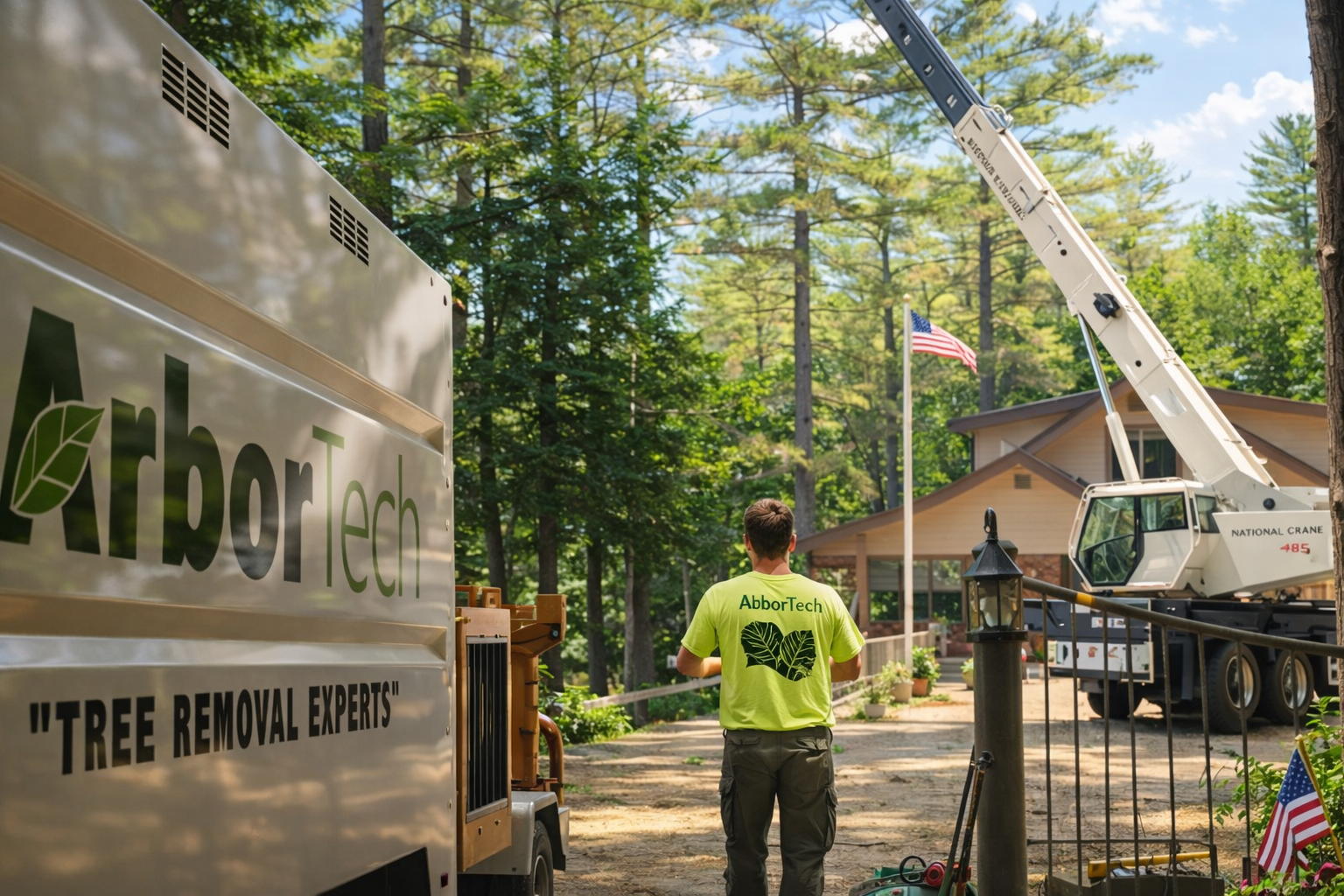
Tree removal near power lines means any tree work where a branch, trunk, tool, rope, ladder, or piece of equipment could get close enough to an energized line to create a shock, arc, fire, or outage hazard. That sounds straightforward, but this is where a lot of people get fooled, because a tree that looks like a normal trimming job from the driveway can turn into a utility hazard the moment a limb swings the wrong way.
What counts as tree removal near power lines
In plain English, this covers more than cutting down a whole tree. It includes pruning, limbing, storm cleanup, and full removal whenever overhead wires are part of the setup. If a branch could brush a line, if a falling piece could pull a wire, or if a bucket truck has to work close to conductors, you are no longer dealing with ordinary tree work.
That is the main thing to understand: the power line changes the whole job. A crew can be excellent at removals in open yards and still not be the right crew for electrical clearance work.
Why power lines change the job
Electricity makes distance matter. A tree does not need to be wrapped around a wire to become dangerous. The closer the branches, tools, and equipment get, the less room there is for error, and tree work always involves movement. Limbs shift, ropes stretch, trunks barber-chair, and cut sections rarely land exactly like a sketch on paper.
A simple cut can also create a chain reaction. A limb falls, catches another branch, twists, drops onto a line, and suddenly your tree job becomes a utility outage, a blocked street, or an emergency call.
It’s Not just about touching the line
Direct contact is only one way things go bad. Electricity can arc, which means it can jump through air under the right conditions. Conductive tools, metal ladders, wet bark, damp ropes, and boom equipment all add risk. Even green wood can behave in ways you do not want anywhere near energized lines.
The catch is movement. A branch can swing like a shopping cart with a bad wheel, wobble off line, and end up exactly where you did not want it. That is why “almost clear” is not safe.
The risk Isn’t only personal injury
Injury is the obvious fear, but it is not the only one. A bad cut can rip down a service drop, start a fire, damage a roof, shut off power to neighboring buildings, or block road access for hours. For a business, that can mean lost operating time. For a homeowner, it can mean spoiled food, HVAC shutdown, and a much bigger repair bill than the tree work itself.
Utility damage can also bring delays, extra charges, and a lot of finger-pointing if the wrong crew took the job.
Which jobs are safe for a regular tree crew, and which are not
Some tree jobs are routine. Some are line-clearance jobs. Mixing those up is where trouble starts.
Jobs usually safe when no clearance issue exists
A regular licensed tree service is usually fine when the tree is well away from overhead lines and no cut piece can reach them. The same goes for pruning lower limbs on a backyard tree with wide open clearance, stump grinding after a tree is already down, and debris cleanup once the electrical hazard is gone.
If the wires are not part of the fall zone, swing zone, or equipment setup, you are generally in standard arbor work territory.
Jobs that require line-clearance or utility coordination
If branches can hit the line, this is a specialist job. Full stop.
That includes limbs overhanging primary lines, trees touching service lines, storm-damaged hangers caught above conductors, crane removals near energized wires, and any work where minimum approach distances have to be managed. It also includes jobs where the tree itself is not touching the line yet, but any controlled piece could drift, bounce, or rotate into it.
Service drop vs. main utility lines
The service drop is the line running from the pole to your building. The main utility lines, often called primary distribution lines, run along the street and carry much larger power loads. Both are dangerous.
The difference matters because the rules, response process, and who can work nearby may change. A low service line to your house is still not a DIY problem, but a tree over primary distribution lines usually means utility coordination from the start.
Who should handle the work
The right call depends on which line is involved and how close the tree is.
Utility company, line-clearance arborist, or standard tree service?
Utilities manage line reliability and public electrical safety around their system. Line-clearance arborists are trained specifically for vegetation work near energized lines. Standard tree services handle normal pruning and removal where no electrical clearance issue exists.
Here’s the thing: booking the wrong crew wastes time and can make the site less safe. If the estimate sounds casual about the wires, keep looking.
Credentials and training to ask about
Ask direct questions. Are you qualified for work near energized lines? Do you follow ANSI Z133, the tree work safety standard, and OSHA electrical clearance rules? Are you insured for line-clearance work? Will utility coordination be included if needed?
Those questions are not overkill. They are the basic filter that separates ordinary tree cutting from electrical hazard work.
Why notification and scheduling matter
Some jobs need advance utility notice, a site review, temporary shutoff planning, or traffic control before a saw starts. Access matters too. A branch over a rear alley in Tampa at 7:30 a.m. can change the whole setup because bucket access is tighter than it looked from the street.
Safe scheduling is part of the job, not a delay tacked on afterward.
How safe tree removal near power lines usually happens
A safe project looks controlled from the beginning, not improvised in the moment.
Site assessment and hazard planning
The crew identifies the line type, checks clearances, looks for decay, lean, cracks, and limited access, and builds a cut plan before any cutting begins. The trick is controlling every piece before it moves. That includes where it will swing, where it will land, and what happens if it does neither perfectly.
Pruning, sectional removal, or full removal
Sometimes the answer is directional pruning, which simply means cutting in a way that guides future growth away from the lines. Sometimes the tree has to come down in sections, with limbs rigged and lowered carefully. Sometimes full removal is the smarter call because repeated pruning will only buy a short-term fix.
A safe job is not about saving every branch. It is about choosing the method that keeps the line clear and the site stable.
Utility involvement, temporary outages, and cleanup
In some cases, the utility may de-energize lines or protect conductors. In other cases, the utility may decline, which affects how the work can proceed. After removal, the job usually finishes with debris hauling, wood removal, stump work if requested, and a final check that no hazards remain around the line area.
Common misunderstandings that get people hurt
Most bad decisions around these jobs start with a false sense of control.
“It’s Fine if You’re careful”
Carefulness does not replace training, clearance rules, and proper equipment. DIY cutting near overhead lines is a bad bet every time.
“Only big trees are a problem”
Small limbs cause plenty of damage. A short branch can snag a service line, shift your balance on a ladder, or bridge the gap you thought was safe. Size does not remove the electrical hazard.
“The utility will handle any tree for free”
Utilities often trim or remove trees when line reliability or public safety is at stake, but not every private tree problem becomes a utility responsibility. If a tree is your property issue but near lines, you may still need to arrange qualified tree work yourself.
What you can do before booking the work
You do not need to solve the hazard. You just need to recognize it and stop before making it worse.
Spot the warning signs
Pay attention to branches touching or nearly touching wires, buzzing, sparking, sudden leaning after a storm, cracked limbs hanging over lines, or a service line pulled unusually low. Do not test, move, or shake anything.
Get the right photos and questions ready
Take clear ground-level photos. Note whether the line runs pole-to-house or street-to-pole. Ask who owns the line, who will be on site, and whether utility coordination is included in the bid.
Know when to stop and call immediately
If a line is down, a branch is smoking, a tree is resting on wires, or storm damage leaves anything hanging near conductors, stop there and call immediately. That one rule will save you the most trouble: if a branch is anywhere near live lines, do not reach for a ladder, reach for the phone.
Disclaimer: This article is for general informational purposes only. It is not professional advice, a quote, or a service agreement. Conditions at your home or property may differ; contact a qualified professional for an on-site evaluation before making repair, safety, or spending decisions.
Need a Lakes Region tree visit?
Send photos and notes, then request an estimate. We will explain what we can confirm and what comes next.