What TCIA Accreditation Tells You About ArborTech NH
We are a TCIA Accredited Company. Here is what that designation means and why it is different from simply belonging to an industry group.
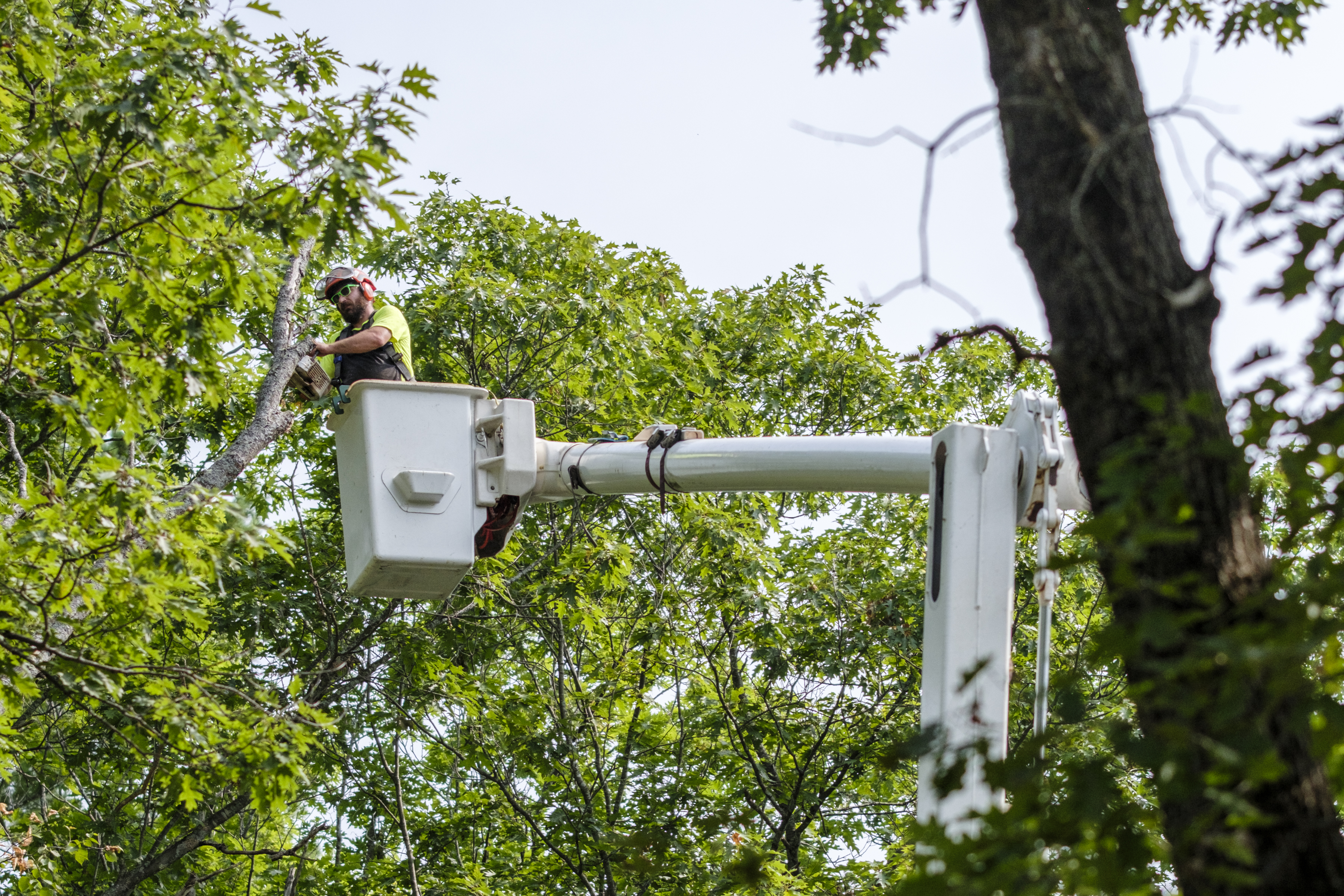
Tree companies use a lot of terms that can sound similar to a homeowner. Certified arborist, accredited company, insured contractor, trained climber, association member. Unless you work in the industry, it is reasonable not to know which descriptions refer to an individual person, which refer to a business, and which are simply marketing language.
We identify ourselves as a TCIA Accredited Company on our website. That designation applies to the company rather than a single employee.
TCIA, short for the Tree Care Industry Association, describes its accreditation program as third-party verification for commercial tree-care businesses. Companies going through accreditation are evaluated against standards involving documented safety and training practices, business operations, customer service, and adherence to accepted industry practices.
For a homeowner, the practical value is not the letters themselves. It is understanding what had to exist behind them.
Accreditation looks at the company around the arborist
A skilled arborist matters, but tree work is rarely performed by one person working alone. There may be climbers, ground crew, equipment operators, trucks, chippers, rigging systems, and a project plan that has to be communicated among several people.
That is why company-level practices matter.
TCIA says accredited businesses are evaluated in areas that include documented employee training and safety programs, customer-service practices, and other business systems. The point is to look beyond the technical knowledge of one individual and consider how the company itself operates.
That distinction becomes easier to appreciate on a complicated job. We may be removing a tree near a house with a crane, lowering sections beside a Lake Winnipesaukee dock, working on an island where equipment arrives by water, or pruning trees within a shoreland area. Those jobs depend on planning and coordination as much as the physical cut. We offer removal, pruning, stump grinding, crane service, and shoreland work across our service area.
Safety systems should exist before the crew reaches your yard
Tree work combines height, weight, moving equipment, rigging, saws, and changing site conditions. A homeowner does not need to become an expert in tree-industry safety practices, but it is reasonable to ask how a company trains people and organizes the work.
TCIA says one purpose of accreditation is to help companies build and maintain documented safety and training programs and evaluate themselves against industry standards. TCIA also maintains industry training resources for tree-care companies and workers.
That does not mean accreditation makes every project identical or removes the need for judgment in the field. Trees and properties vary too much for that. It does mean we have gone beyond simply stating that safety is important.
For a customer, that is a meaningful difference. Browse testimonials and the gallery for how completed jobs look on real properties.
It also gives homeowners a better way to evaluate a tree company
Price will always matter, but tree estimates are hard to compare when the contractors being considered are not offering the same level of operation.
One company may have a crew and equipment suited to a large technical removal. Another may be better suited to a smaller job. One may have documented training systems and third-party accreditation. Another may simply have a truck, saws, and an available date.
That does not mean the highest bid is automatically the best, and it does not mean a badge should replace asking questions. It does mean homeowners can look at qualifications beyond the final number at the bottom of the estimate.
When comparing tree companies, ask who will evaluate the tree, how the work is expected to be performed, what equipment is planned, how the property will be accessed, and what professional credentials apply to the crew or company.
Our own work ranges from ordinary pruning and stump grinding to crane-assisted removals and specialized waterfront projects, so those questions can lead to very different answers depending on the job.
Accreditation is useful context, not a substitute for a site visit
No credential can tell an arborist what is happening on your specific property before somebody looks at it.
A mature pine beside a boathouse does not present the same project as a stump in the middle of an open lawn. An island property does not have the same access as a house on a wide mainland road. Shoreline work may require a different planning process again.
Our existing services reflect those differences. We have separate information for crane work, island properties, Lake Winnipesaukee lots, and shoreland projects rather than describing every tree job with the same process. Read tree work on a Winnipesaukee island starts at the dock for how boat access and no-crane island planning change the estimate.
TCIA accreditation gives homeowners information about the company doing that work. The estimate and site evaluation still determine what should actually happen to the tree.
We serve Gilford, Gilmanton, Laconia, Belmont, Alton, Tilton, Franklin, Meredith, and other communities throughout the region. Homeowners can call 603-491-5183 or request an estimate to discuss a specific property. More reading is on the blog.
Questions About Credentials or a Specific Tree?
Ask about the crew, equipment, and access plan for your property. Accreditation is company context. The site visit still decides the work.