When to Remove a Tree: Signs It’s Too Risky to Keep
Wondering **when to remove a tree** usually starts with one unsettling moment: a heavy limb over the driveway after a storm, a new crack in the trunk, or mushrooms popping up at the base where...
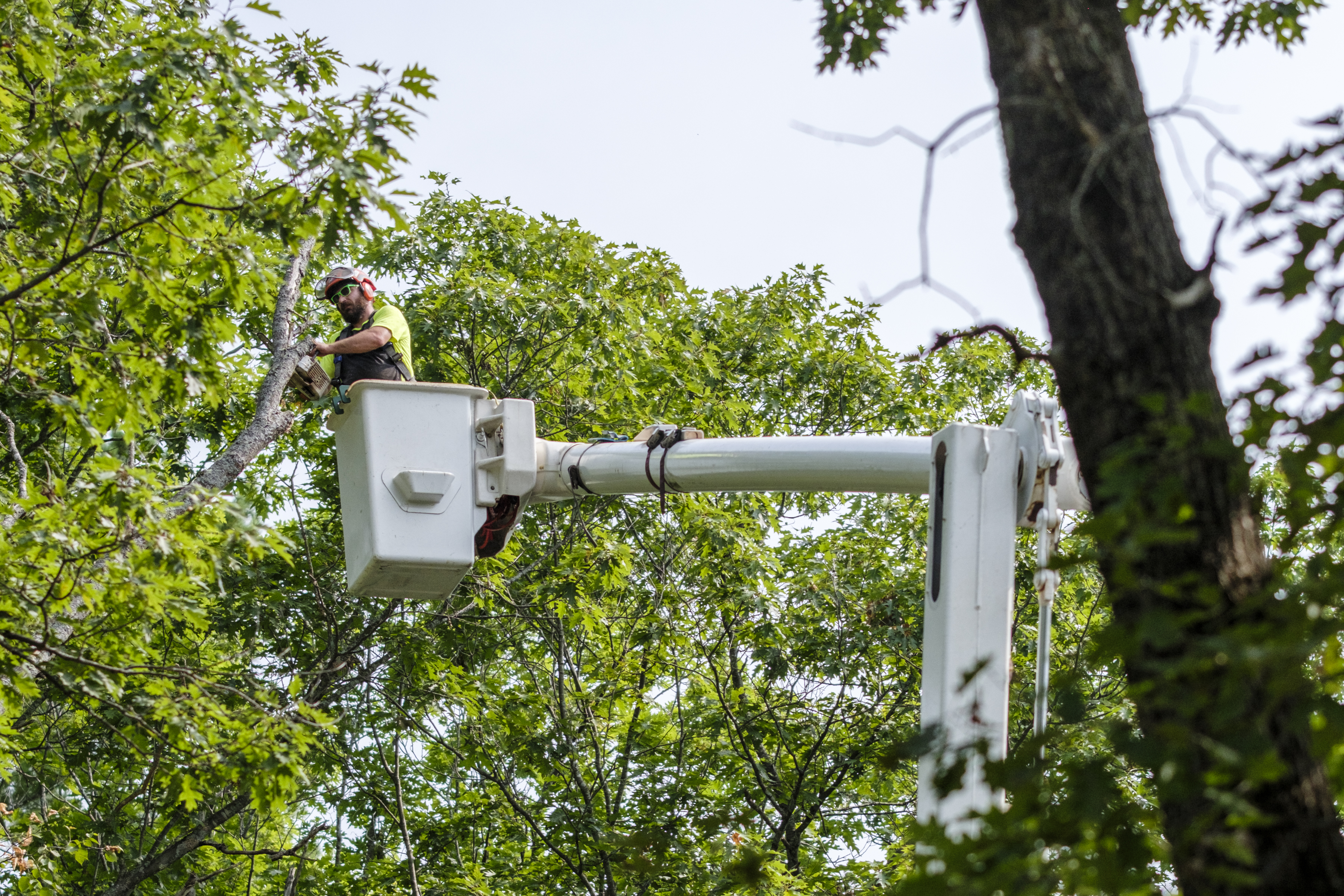
Wondering when to remove a tree usually starts with one unsettling moment: a heavy limb over the driveway after a storm, a new crack in the trunk, or mushrooms popping up at the base where there were none last month. Here’s the plain answer: removal becomes the right move when a tree is no longer reasonably safe, healthy, or suitable for the spot where it’s growing.
What “when to remove a tree” really means
Tree removal is not just about dead trees. A tree can still leaf out every spring and still be too risky to keep. Safety comes before sentiment, and that is the part many people try to delay.
Think of it like an old deck board that still looks fine from a few feet away. If the wood underneath is rotting, appearances stop mattering. The same logic applies to trees. If the trunk is failing, the roots are unstable, or the canopy is dropping major limbs, the question is no longer whether the tree is beautiful. The question is what happens if it comes down in the wrong direction at the wrong time.
The biggest signs a tree is too risky to keep
Most serious warning signs can be spotted from the ground. You do not need to diagnose every problem yourself, but you can notice enough to know when a tree needs attention.
Large dead branches, broken limbs, or a thinning canopy
A few dead twigs here and there are common, especially inside a dense canopy. That alone does not mean a tree has to go. But large dead branches are different. So are broken limbs hanging in the crown, branches with no bark, and sections of canopy that fail to leaf out while the rest of the tree does.
Uneven thinning matters too. If one side of the canopy is sparse, or the top is dying back, that can point to stress, disease, root trouble, or decline that has been building for a while. Deadwood is not just an eyesore. It falls.
Cracks, splits, cavities, and hollow spots in the trunk
Visible trunk damage deserves respect. Deep vertical cracks, open seams where the wood is separating, and large cavities can all mean the tree has lost structural strength.
The tricky part is that a tree with trunk damage may still look alive. Leaves do not prove that the trunk is sound. Trees can keep growing around damage for years, but if too much solid wood is gone, the trunk becomes more like a shell than a support column.
Fungi, rot, or soft wood near the base
If mushrooms or shelf-like growths appear on the trunk or around the root flare, pay attention. Rot simply means wood decay, usually caused by fungi breaking down the tree from the inside out. That process matters most near the base, because that is where the tree carries its load.
Other signs can show up too: bark sloughing off, damp-looking areas, crumbly wood, or spots that feel soft instead of firm. Decay at the base is one of the clearest reasons removal becomes likely, because failure there can mean the whole tree goes at once. University of Maryland Extension notes trunk rot and large fungus near the base as major removal red flags.
Leaning, lifted soil, or exposed roots
Some trees have a slight lean for decades and stay stable. A recent lean is different. If the angle changed after a storm, if the soil is lifting on one side, or if roots are starting to heave out of the ground, the tree may be losing its grip.
Construction damage can set this in motion too. Trenching, driveway work, and excavation often cut roots people did not even realize were there. A tree depends on those roots not only for water, but for anchoring. Once enough support is lost, the tree can fail surprisingly fast.
When the location makes removal the safer choice
Sometimes a tree is not a total loss biologically. The problem is where it stands. Location changes everything.
Too close to your house, driveway, fence, or play area
A defect in the back corner of a large lot is not the same as that exact defect over your roof or above the place where your car sits every night. Arborists call this the target, meaning what the tree could hit if it fails.
A tree over a patio, entry walk, garage, play set, or neighbor’s fence carries a much tighter margin for error. Even moderate defects start to matter more when people or property are underneath them every day.
Growing into power lines or utility spaces
If branches are near power lines, this is not a DIY pruning job. Not close. Utility lines and service drops both deserve caution, though the main overhead lines along streets carry much greater danger.
If the tree is touching lines, sparking, or threatening to fall into them, stay clear and contact the utility company or a qualified tree service trained for line clearance work. Arbor Day Foundation also warns that trees near utility lines are a situation for a professional, not a ladder and a pole saw.
Outgrowing the space or causing repeated damage
Sometimes the tree is healthy enough, but it is still the wrong tree in the wrong place. Roots lift sidewalks. Branches scrape shingles. Gutters clog every storm. Sightlines at the driveway get blocked. Cleanup becomes constant.
At some point, repeated damage stops being a maintenance issue and becomes a pattern. If the tree keeps creating expensive problems, removal can be the smarter long-term choice than trimming it back every year and hoping for the best.
How tree health affects the removal decision
Not every unhealthy tree needs removal. Some recover well with pruning, watering changes, pest treatment, or root-zone protection. But certain health problems push the decision hard in one direction.
Insect damage, disease, and environmental stress
Pests and disease can weaken trees directly, but environmental stress often starts the decline. Drought, compacted soil, flooded roots, storm damage, lightning, and construction all reduce a tree’s ability to defend itself. Then insects or decay move in.
The pattern matters more than the label. If the canopy has been shrinking, bark is falling off in sections, and new growth is weak, the tree may be running out of energy. Texas A&M AgriLife points out that insect pressure, disease, and site stress all factor into whether a tree can recover or should come down.
The “how much is dead?” rule of thumb
A useful screening rule is simple: the more of the canopy that is dead, the more likely removal becomes. A commonly cited benchmark is the 25 percent rule, meaning if around a quarter or more of the canopy is dead, concern rises sharply, especially in mature trees or trees with other defects. Texas A&M AgriLife discusses this as a practical starting point.
It is only a screening tool. Some trees tolerate damage better than others. But if large sections are dead and the trunk or roots also show problems, the odds of recovery drop fast.
Desirable tree or constant problem tree?
Species matters more than most people expect. Some trees are short-lived, brittle, invasive, messy, or simply poorly suited to small yards. A weak-wooded tree that sheds limbs every summer thunderstorm is not the same bet as a long-lived, structurally stronger species.
If your tree has always been a problem, removal can be the clean break that saves money and stress over time. That is especially true if it is already declining and growing in a bad spot.
A quick way to size up the risk before you call
You do not need to become an arborist in your yard. But a simple risk check can calm the panic and help you decide how urgent the situation is.
Ask: what could it hit if it fails?
Start with the obvious target. Could it hit your house, garage, cars, sidewalk, fence, play area, neighboring property, or utility lines? The same defect becomes far more serious when something valuable sits within striking distance.
Ask: has anything changed recently?
Recent change matters. Storms, fresh cracks, new fungi, root cutting, drought, lightning, soil disturbance, or a sudden lean are all more concerning than an old scar that has looked the same for years.
A tree that seemed fine last season but now looks different deserves a closer look. Trees rarely send a polite warning twice.
Ask: is the risk immediate or developing?
A split trunk after a storm is urgent. A gradual thinning canopy is serious, but not usually a drop-everything emergency. That distinction helps you know whether to stop using the area right now or schedule an inspection soon.
What not to assume about a risky tree
A lot of tree mistakes come from reasonable assumptions that turn out to be wrong.
“It still has leaves, so it must be fine”
A leafy canopy only tells you the tree is still alive in some capacity. It does not tell you the trunk is strong, the roots are stable, or the base is not rotting.
A hollow or decayed tree can still leaf out. That is what catches people off guard.
“It’s Been leaning that way for years”
Maybe. Some leaning trees are stable. The catch is that an old lean does not excuse new warning signs. If the lean worsened, the soil lifted, or roots started showing movement, the situation changed.
“I can just cut the bad branch and keep the tree”
Sometimes you can. Pruning is a real fix for certain issues, especially isolated dead limbs or canopy crowding. But pruning does not repair root failure, deep decay, or a major structural split.
If the problem is in the trunk or at the base, cutting off one branch is like repainting a wall over water damage. It may look better for a minute, but the real issue is still there.
When to call an arborist instead of waiting
If a tree is near people, property, or wires and shows serious defects, get it checked now. Large pruning and removals are not safe weekend projects.
Signs you should schedule an inspection soon
Dead limbs, new fungus at the base, canopy thinning, storm damage, a fresh lean, bark loss, or root disturbance from recent construction all justify an inspection. If something feels off, that instinct is worth listening to.
Signs you should treat as urgent
Split trunks, hanging limbs, partial collapse, soil lifting around the roots, lightning strikes, or any contact with power lines deserve immediate attention. Stay out of the fall zone and keep others away too.
What a pro will look at during an assessment
An arborist checks structure, root condition, trunk defects, decay, species traits, site history, and nearby targets. That matters because risk is never just one thing. A small cavity in a low-risk location may be manageable. The same cavity over a nursery pickup lane or a front porch is a different story entirely.
Best time of year to remove a tree
Timing comes up a lot, usually right after the safety question and right before the cost question.
Remove it now if it’s hazardous
If the tree is unsafe, season does not matter nearly as much as people hope. Safety beats waiting for the perfect month. A split tree over your driveway in August is not improved by making it to November.
When dormant-season removal can be easier
For lower-risk removals, late fall through winter can be convenient. There is less leaf volume to handle, ground conditions may offer cleaner access in some yards, and the tree’s structure is easier to see.
That said, access and equipment matter more than a date on the calendar. A fenced backyard in February can still be harder than an open front yard in June.
Does timing affect price?
Sometimes, but not as much as people assume. Cost usually depends more on size, access, crane needs, proximity to structures, and emergency timing. Davey Tree notes that complexity often drives price more than season alone.
How to decide if removal is the right next step
By this point, the decision usually gets clearer. You are balancing condition, location, and consequences if something fails.
Remove the tree if the risk is high and the fix is limited
Removal is the clearest choice when you are looking at major decay, unstable roots, severe trunk defects, utility conflicts, or repeated property damage. If the tree has a high chance of failing and pruning or treatment will not meaningfully reduce that risk, keeping it stops making sense.
Keep it with pruning or monitoring if the risk is manageable
Some trees can stay with corrective pruning, cabling, treatment, or periodic inspection. That tends to make sense when defects are minor, targets are limited, and the tree is otherwise stable.
Try one simple next step today
Walk your yard once, slowly. Look at the trunk base, the canopy, and the ground around the roots. If anything changed recently, take a few clear photos and book an inspection before the next storm makes the decision for you.
Disclaimer: This article is for general informational purposes only. It is not professional advice, a quote, or a service agreement. Conditions at your home or property may differ; contact a qualified professional for an on-site evaluation before making repair, safety, or spending decisions.
Need a Lakes Region tree visit?
Send photos and notes, then request an estimate. We will explain what we can confirm and what comes next.