Trimming Branches for Dock Lines and Boat Rigging
Snagged dock lines and scraped rigging are signs branches need selective trimming—not a full tree removal every time.
Boating season turns overhead branches into daily friction. Lines catch on low wood, masts brush limbs when backing into slips, and guests duck under the same branch every trip to the dock. In June, with leaves fully out, those conflicts are at their worst.
Not every snag requires removing the tree. Selective trimming of conflict limbs often restores function while keeping shade on the deck and buffer compliance on shoreland lots. The key is mapping the exact airspace lines, masts, and rigging need—not guessing from the lawn.
Map the Conflict Zone
Stand on the dock at high-traffic spots and note branches within reach of lines, booms, and tall rigging. Include the path you use when carrying kayaks and paddleboards—clearance matters at shoulder height, not just above masts.
Wind shifts overnight change which limbs grab lines. Note conflicts at multiple wind directions if your mooring is exposed. Photograph snags where line chafe marks bark—those limbs are repeat offenders.
Common Rigging Conflicts
- Spring lines catching on low horizontal branches
- Mast tops brushing limbs when entering slips
- Outriggers and fishing gear at shoulder height on dock paths
- Deadwood over cleats that lines ride against in surge
Pruning Approach
Selective reduction targets the limbs that cause problems while keeping shade and structure where possible. This is precision work, not indiscriminate cutting. Our pruning crews work on waterfront lots throughout Belknap County.
Cuts should be made at appropriate branch collars with consideration for future growth—some species regrow quickly toward the same airspace if scope ignores growth habit. Plan revisit intervals on fast-growing waterfront trees if needed.
When Removal Is Better
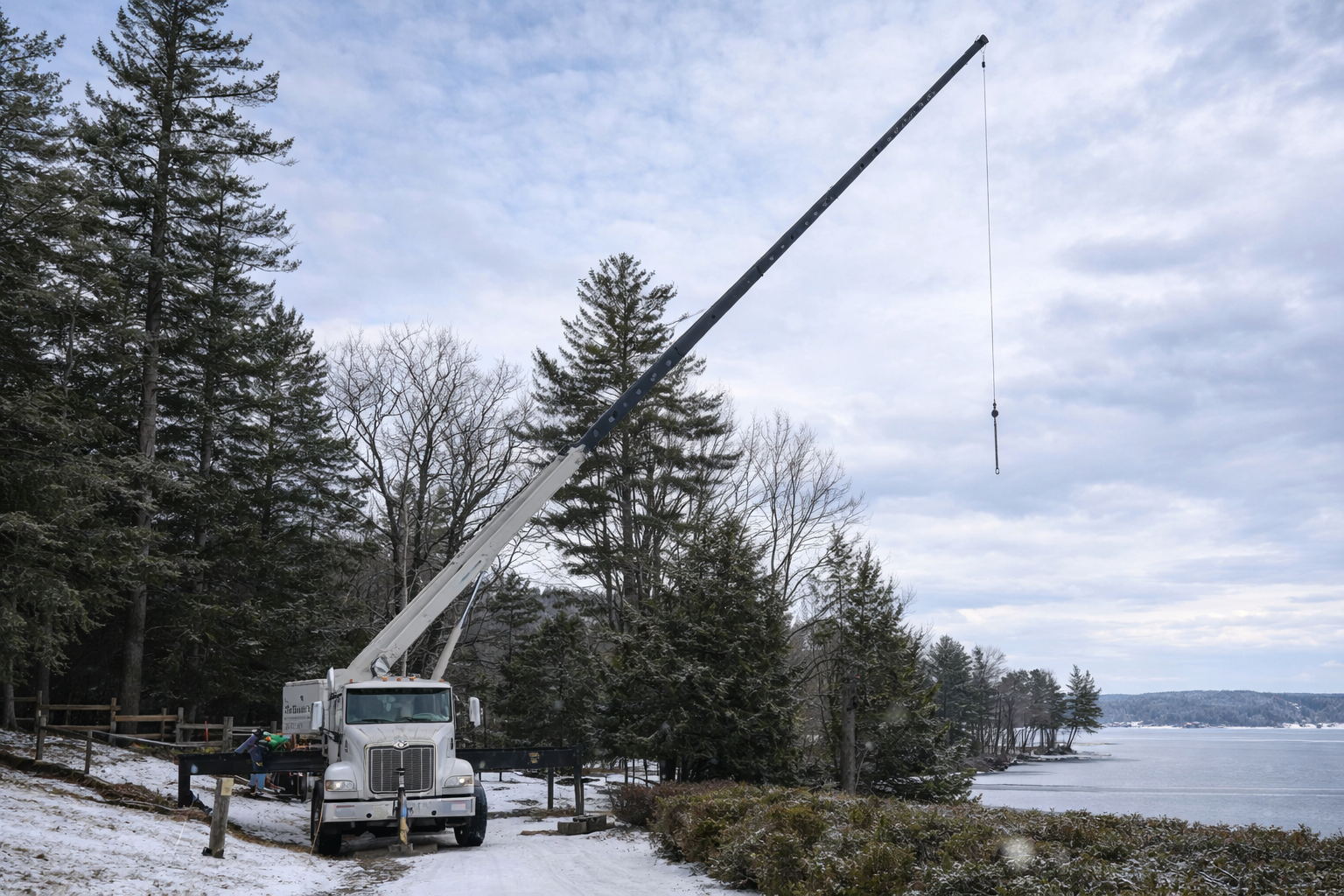
Dead trees, major decay, or species poorly suited to tight dock corners may be better removed than trimmed every year. Crane access helps when the tree sits between the house and the water with no drop zone on land.
Compare annual trim bills against removal when the same limbs return every season or when decay fungi appear at repeated cut sites. When to remove a tree walks through those decisions.
Shoreland and Neighbors
Dock work often sits near lot lines and shared associations. Coordinate with neighbors or association rules before cutting limbs that overhang shared slips. Shoreland protection may apply even when motivation is rigging clearance, not views.
For May planning context, see dock traffic and thinning in May. Contact us with dock photos for faster quotes.
Sailboats and powerboats need different clearances—mention your typical craft when describing conflicts so reduction cuts target the heights that matter for your dock, not a generic template.
Surge and Seasonal Water Level
Dock height changes with water level and boat load. Branches that clear at low water may snag lines after surge or when the lake rises—note conflicts at both extremes if your mooring is tidal in practice.
Photograph line chafe marks on bark—they show exactly which limb grabs under tension and save guesswork when crews plan reduction cuts from the lawn view.
Across Gilford, Meredith, Laconia, and other Belknap County communities we serve, the same seasonal pattern repeats: full leaves, lake wind, and crowded paths expose clearance and structure problems that looked minor in April. Professional pruning, shoreland-aware planning, and timely contact with photos keep small issues from becoming emergency removals when summer weather arrives.
See services for pruning, removal, crane work, and emergency response across the Lakes Region.
Summary
June boating demand turns branch conflicts into daily snags. Map airspace for lines, masts, and shoulder-height gear from the dock, not the lawn. Selective pruning solves many conflicts; removal fits dead, decayed, or repeatedly failing trees. Respect shoreland and shared dock context. Precision cuts beat annual frustration and protect the trees that still belong on a well-used waterfront.
Dock Lines Catching on Overhead Branches?
Selective pruning restores clearance for boats and mooring hardware.