Plan Stump Grinding Around Septic, Stone, and Lake-Lot Access
Septic lines, stone walls, narrow gates, and chip plans decide the grind before the machine ever starts.
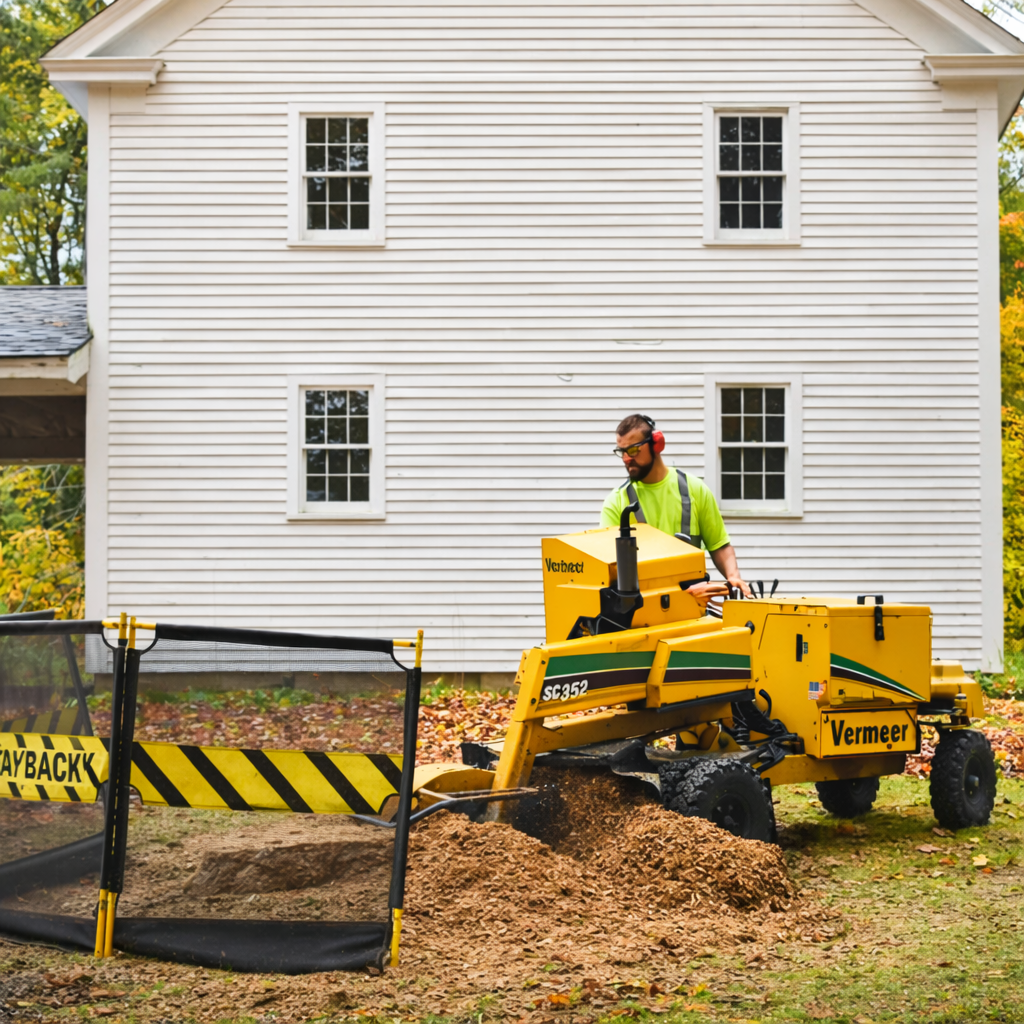
On a Lakes Region lot, the stump is rarely the whole job. Septic lines, stone walls, narrow gates, and a steep path to the water often decide which grinder can reach the work and how deep the crew can cut. Homeowners who book grinding after a removal sometimes discover those limits only after the truck is already in the driveway.
ArborTech NH handles stump grinding across Gilford, Belknap County, and the wider Lakes Region. This article is about planning the grind around what is already in the ground and how the crew will get there, not about whether a stump should stay as a decorative feature.
Find septic and utilities before the machine rolls
A grinding head cuts wood and soil in the same pass. If a septic tank, leach field, or private utility sits near the stump, the setup changes. Mark known septic lids, cleanouts, and any map the prior owner left. Note irrigation lines, low voltage cable, and well lines if you have them. DigSafe and private utility locates still matter when the work sits close to buried services.
If nobody can confirm where the septic field sits, say that on the estimate request. An unknown field is a reason to slow down and probe, not a reason to assume open lawn. Waterfront lots in our Lake Winnipesaukee coverage often mix older septic layouts with later landscape stone, so the first pass on paper saves a long day on site.
Stone walls, ledge, and chip piles change the plan
Stone walls look fixed until a grinder needs swing room or a truck needs a turn. Measure the wall face closest to the stump and note any ledge that already shows at the surface. Chips have to go somewhere. Ask whether chips stay as backfill, get hauled, or move to another bed. That choice affects how much material the crew leaves and whether a second trip is needed.
Future planting also belongs in the same conversation. Grinding six to eight inches below grade is enough for many lawns. A new tree, patio pad, or grade change may need a deeper cut or root chasing that is a separate scope. Our note on stump grinding after tree removal covers the handoff when landscaping comes next.
Gate width and lake-lot access decide the machine
Walk the route the equipment will take from the road to the stump. Measure the narrowest gate, the tightest turn, and any soft shoulder that fails after rain. A mainland lot with a wide drive can take a larger grinder. A steep path between a cottage and the shore may force a smaller machine or a longer setup.
Island and hard-access properties add another layer. When the stump sits where a truck cannot stage, the crew may need boat or barge support similar to other difficult removals. Browse crane services and our service areas pages when access is the real limit, and read island tree work that starts at the dock if the property is off the mainland road.
What to send before the visit
A useful request is short and specific:
- Photos of the stump, the gate, and the path from the road
- Known septic or utility locations, or a clear note that they are unknown
- Whether chips should stay or leave
- Any wall, ledge, or planting that sits within a few feet of the stump
- Town and lake name if the lot is shorefront
That list lets us choose equipment before the day of the job. It also keeps grinding separate from restoration work that may need a landscaper after the chips settle.
Keep grinding scoped to what you approved
Stump grinding removes the stump and the near roots in the cut zone. It does not automatically regrade the lawn, rebuild a wall, relocate a septic component, or plant a replacement tree. Those items should show as separate lines when they matter. Shoreland rules may also limit what can change near the water, which is why shoreland protection questions belong in the same file as the grind when the stump sits close to the lake.
After the work, keep the closeout with the property: depth ground, chip disposition, and anything left for a later visit. Neighbors and future buyers ask about septic and stump history more often than people expect. A one page note beats a memory from a summer weekend.
We serve Gilford and communities across the Lakes Region. Call 603-491-5183 or request an estimate with the photos and access notes above. More tree topics live on the blog, and completed jobs show up in testimonials.
Need a Stump Grind Planned Around Real Site Limits?
Send gate photos, septic notes, and the path from the road. We will match equipment to the lot.