Spotting Dead Branches Over Roofs in Full Leaf
Once the crown fills in, dead wood hides behind green. Here is how to find bare limbs and hangers over your roof and drive from the ground.
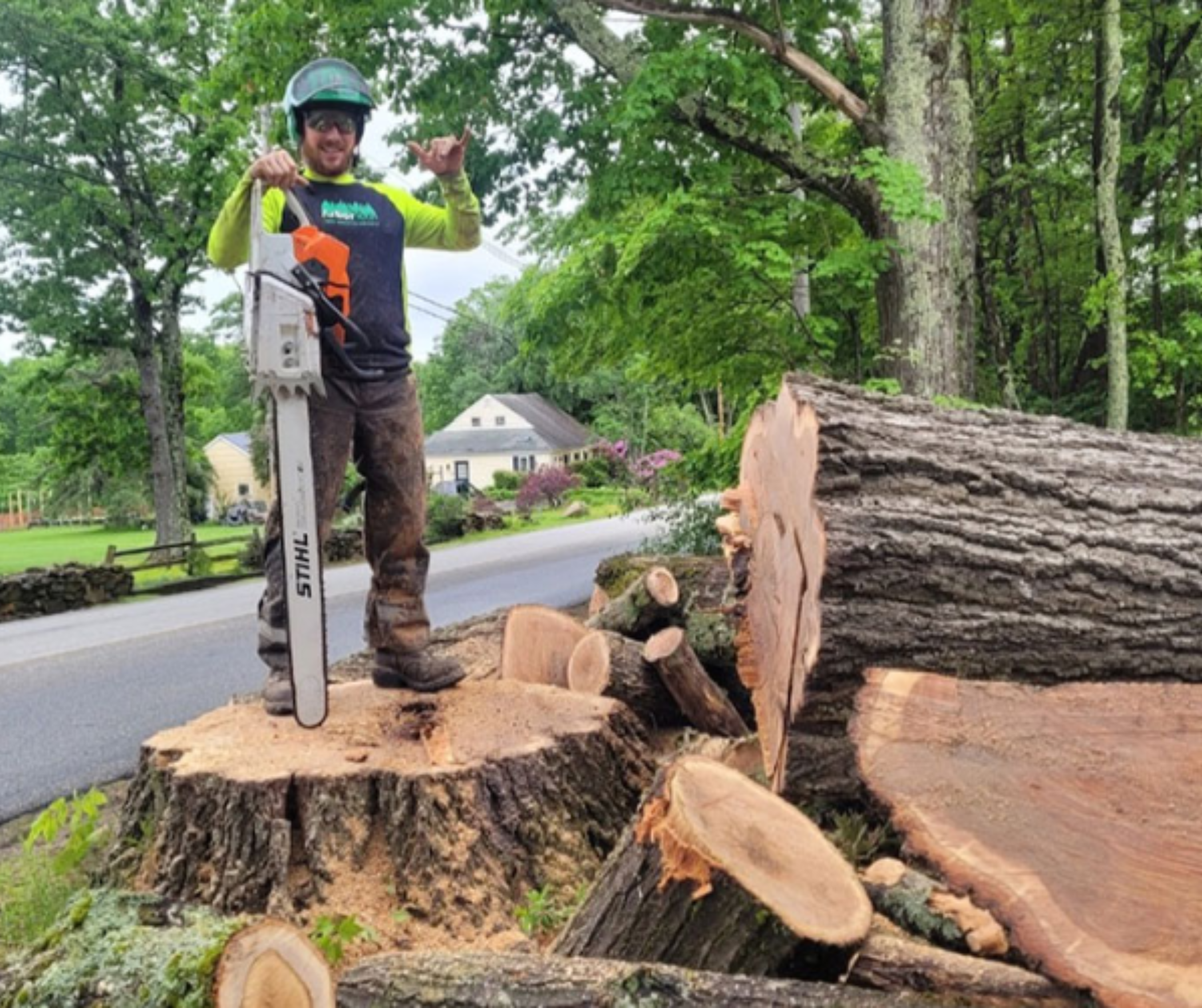
By the middle of summer the crowns on Winnipesaukee and the surrounding Belknap County lakes are as full as they get. That green wall looks healthy from the lawn, and most of it is. The trouble is that a dense canopy also does a good job of hiding the branches that stopped growing. A dead limb over the roof reads the same from the driveway as a live one until you learn where to point your eyes.
This piece is about finding that dead wood and those loose hangers over roofs, decks, and parking areas while the leaves are out. It is not about leaf color or feeding damage, which we covered in the summer leaf chew and discoloration guide. It is about the structure you can read from the ground on a normal afternoon.
Why full leaf makes dead wood easier to spot
Bare winter branches all look similar against the sky, so a dead limb blends into the tangle. In full leaf the difference stands out. Live branches carry a solid mass of leaves. Dead ones stay bare, so they show up as gaps, gray sticks, or thin lines poking through the green.
Stand back where you can see the whole crown against the sky, not straight up the trunk. Walk a slow half circle around the tree. The spots where light punches through a full crown are the places to study, because most of those holes are dead branches that never leafed out this year.
What a dead branch looks like from the lawn
- A bare gray or tan stick surrounded by green on the same limb
- Peeling or missing bark compared with the smooth live wood around it
- Fine twigs that have dropped, leaving a stubby end instead of a leafy tip
- A branch that hangs at a different angle than its neighbors after wind
Hangers and broken limbs caught in the canopy
A hanger is a branch that has already broken but has not reached the ground. It gets caught on lower limbs or wedged in a fork, and full leaf hides it well. These are the pieces that come down first in the next blow, and over a roof or a parked truck that timing matters.
Look for a branch that crosses others at an odd angle, a ragged break point instead of a clean fork, or leaves that have gone brown on one hung-up section while the rest of the tree stays green. Wind from the last front often shakes hangers loose enough to see them shift. We wrote about that kind of after-storm check in checking trees after weeks of wind, and the same slow look applies here.
If a hanger sits directly over the roof, the deck, or the walk to the dock, note it and keep people from under it. This is the category we get called on most after a storm, and it is the easiest to catch early. Our storm damage assessment notes cover what the crew looks at when we arrive.
Reading the branches that reach over the roof
Not every branch over a house is a problem, but the ones that are dead or poorly attached deserve attention before they drop shingles or gutters. Sight down the roof line from the yard and follow each limb that extends past the eave.
Trace the branch back to where it joins the trunk or a larger limb. A tight fork with bark pinched into the seam is weaker than an open, U-shaped union. We go through that ground-level check in detail in how to check tree forks and included bark, and a dead branch above a weak fork is worth flagging twice.
Big-tooth aspen, red maple, and paper birch near the shore tend to shed inner branches as the crown pushes light to the outer tips. Oaks hold dead wood longer and higher, which is why the gray sticks near the top of a big oak over the roof are common on lake lots.
What to photograph before you call
Ground photos shorten the first visit and help us plan access. A few clear frames tell us more than a description over the phone.
- The whole tree against the sky so we can see the bare limbs in context
- A closer frame of the dead branch or hanger and where it sits over the roof
- The fork or union where the suspect limb attaches to the trunk
- The ground below, showing the drive, deck, or path the branch overhangs
Send those through our contact page and mention the town and how tight the access is. On a narrow lot the drop zone and the equipment path decide most of the plan before we ever climb.
Pruning, removal, or a crane pick
Most dead wood over a roof is a pruning job. A climber or a lift removes the dead limbs and hangers, cuts back to sound wood at the union, and leaves the live crown intact. Clean deadwood removal through tree pruning is the usual outcome when the trunk and main structure are sound.
When the whole tree is in decline, leaning over the house, or hollow at the base, tree removal moves up the list. Dead branches near the top are sometimes the first sign of a larger structural problem, so we look at the trunk and root flare, not just the limb you noticed.
Tight lake lots with a house directly under the crown often call for a crane to lift sections out rather than drop them. On steep shoreline addresses in towns like Gilford, a backyard pick over a multi-story lake home is a normal part of the work. If a removal leaves a stump in the way of a patio or path, stump grinding finishes the job.
You can see the full range of what the crew handles on the services page, and past write-ups on seasonal tree care live on the blog.
Summary
A full summer crown hides dead wood and caught hangers that a bare winter tree would show plainly. Stand back, watch for gray sticks and light holes against the sky, and trace each limb that reaches over the roof or drive back to its union. Photograph the whole tree, the suspect branch, and the ground it overhangs, then let an arborist sort pruning from removal. Catching those bare limbs now beats finding them on the roof after the next storm week across Lakes Region lots.
Dead Limbs Hanging Over Your Roof?
Send ground photos of the tree and the roof line. We help sort pruning from removal on tight lake lots.