Summer Leaf Chew and Discoloration on Lake Trees
Not every spotted leaf is disease. Insect feeding, drought edge burn, and fungal spots leave different signatures if you know what to photograph.
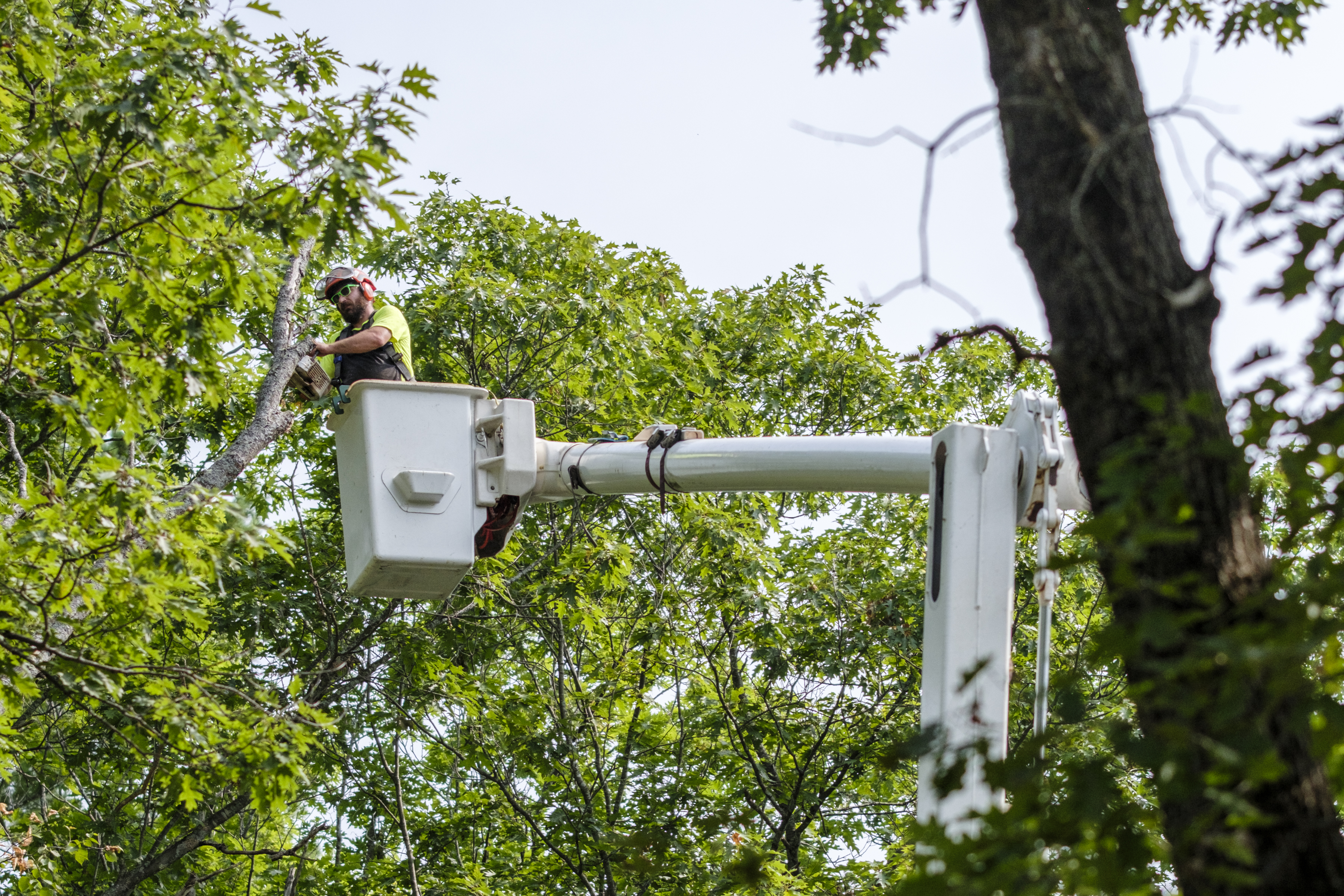
By mid summer on Lakes Region waterfront lots, canopy color can show several problems at once. Caterpillars chew holes through leaves on one branch while a maple shows crispy brown edges on another. Homeowners often lump every blemish under disease when the fix differs by cause.
This article sorts insect chew, drought edge burn, and fungal spotting from ground photos. It complements our common tree diseases guide by focusing on midsummer leaf surface patterns after full leaf out.
Insect chew and skeletonized foliage
Caterpillars and beetles often eat tissue between veins, leaving leaves with only the vein pattern left on individual leaves or outer branch tips. Damage may show up suddenly on one section while the rest of the crown stays green.
Look for insect droppings on leaves or ground beneath the branch, fresh feeding margins, and insects visible on undersides in morning light. Outer branch tips are common entry points on maples, birches, and ornamentals near lights and docks.
What to photograph for the office
- Affected branch versus a healthy branch on the same tree
- Close up of leaf edges showing vein pattern left behind
- Ground litter or insect droppings under the branch
- Tree species if you know it, or bark photo for ID help
Localized feeding rarely requires whole tree removal. Selective pruning to remove heavily chewed tips may be part of a plan after identification. Send images through contact before you spray unknown products that can harm pollinators on waterfront lots.
Drought edge burn and heat load on lake lots
Crispy brown margins on many leaves, often starting at tips and edges, can follow hot dry weeks when roots cannot keep up with water loss. Open lake fetch and reflected heat off roofs and pavement add stress even when turf looks watered.
Burn usually appears broadly across exposed sides of the crown, not only on one small branch cluster. Compare the water side and inland side of the same tree after sunny, windy afternoons.
Watering habits matter at the root zone, not the leaves. Deep occasional soaking beats nightly sprinkles that never reach absorbing roots on compacted paths. Read soil compaction when foot traffic packs soil near trunks on busy lake paths.
Low water and exposed roots on shorelines add stress separate from leaf chew. See low water and exposed roots when bank geometry changed this season.
Fungal spots and disease patterns
Fungal leaf spots often show as circular or angular brown patches with defined edges, sometimes with yellow halos, spread across leaves rather than eaten out between veins. Some species carry spot diseases that look alarming but cause limited long term harm.
When spots appear on multiple trees of the same species in the same wind exposure, disease moves up the suspect list. When only one stressed tree shows spots after mower injury or root compaction, cultural causes may share blame.
Take photos of both the top and underside of affected leaves. Spots that look the same on both sides often point to environmental stress or physical damage. Spots that differ between top and bottom sides are more likely fungal.
Our disease guide covers longer term patterns. Summer photos help us separate spot diseases from chew and burn before you commit to removal.
Chronic decline on waterfront trees with included bark unions may need structure review in addition to leaf symptom ID. Read checking tree forks from the ground when canopy thinness follows years of stress, not one hot week.
When pruning, removal, or monitoring fits
Light localized chew on a sound tree may warrant monitoring after identification, plus selective pruning of spent tips. Widespread defoliation two years in a row deserves a site visit and health history review.
Do not spray before you know the cause. Broad insecticides on waterfront lots can harm pollinators and fish habitat when product drifts toward the water. Identification first, treatment second.
Removal belongs on the table when structure is compromised, lean increased, or roots are undercut on shoreline banks even if leaves still hang on. Compare with when to remove a tree before cosmetic sprays mask structural problems.
Tight lakefront jobs may need crane services when removal is the measured outcome. Mention access and drop zones early when scheduling on Holderness, Alton, or other narrow frontage towns.
Explore services for pruning, removal, grinding, and shoreland aware care. Fertilization decisions should follow ID, not precede it. See fertilization in northern climates when nutrition is genuinely in question after other causes are ruled out.
Summary
Summer leaf damage on lake trees splits into insect chew, drought edge burn, and fungal spotting with different photos and next steps. Document branch level patterns, ground litter, and sun exposure before you treat every blemish as disease. Localized feeding often fits monitoring and selective pruning. Broad burn ties to root zone stress. Spot diseases need species context. Clear images shorten the first arborist visit across Belknap County waterfront lots.
Leaves Look Wrong on Your Waterfront Trees?
Send close ups and branch context photos. We help separate chew, drought stress, and disease symptoms.