How to Check Tree Forks and Included Bark From the Ground
You do not need to climb to spot many fork problems. Full summer leaves make some splits easier to see from the lawn when you know what to look for.
Full crowns, afternoon storms, and busy paths are normal on Winnipesaukee and surrounding Belknap County lakes this time of year. Many homeowners notice a tight fork or a bark seam only after a limb fails. The structural clues are often visible from the ground weeks earlier if you slow down and look at fork unions from the lawn.
This guide explains co-dominant stems, included bark, and tight V unions without climbing. It complements our May article on co-dominant stems after budbreak by focusing on mid summer checks before peak storm weeks.
Co-dominant stems and why two trunks compete
A co-dominant stem is a second main leader that grew beside the original trunk instead of becoming a side branch. Both leaders carry similar diameter and height. You end up with two stems of similar size competing for the same role. On open lake fetch, both catch more wind than a single dominant trunk would.
From the ground, look for two parallel stems rising from one point with little taper between them. If neither stem clearly dominates, treat the union as a long term planning item even when leaves look healthy.
Ground clues you can photograph
- Two stems of similar size splitting from one height on the trunk
- A narrow channel or seam running into the union from above
- Recent bark cracks or sap streaks on one side of the fork
- Asymmetric crown weight toward the water on waterfront lots
- One stem leaning toward a roof, dock, or path while the other stays upright
Stand back for a wide shot, then move in for a close up of the union. Include something familiar for scale, like a door or a dock post. Share both when you request an estimate. Fork photos beat vague notes about a tree that looks heavy.
Included bark inside tight V unions
Included bark forms when two stems grow so close that bark gets pinched between them. Wood cannot knit a strong connection over that bark layer. The union may look fine from a distance while the interior attachment stays weak.
Tight V shapes are higher risk than U shaped unions with a visible branch collar. Lake wind loads full crowns from several directions, so included bark unions on waterfront trees deserve earlier professional review than sheltered yard trees inland.
A simple ground check: if you can fit your fingers into the top of the V and the bark looks rolled or squeezed inside the seam, included bark is likely. That does not mean the tree must come down tomorrow, but it does mean the fork belongs on your planning list.
Read structural pruning patterns for how young trees can be trained before forks become mature problems. Older trees may need cabling, selective reduction, or removal when unions fail ground tests.
What belongs in professional pruning versus removal
Selective pruning can reduce end weight on a sound union, raise clearance over paths, and slow competition between stems when species and health allow. It cannot erase included bark inside a tight fork.
When a stem leans toward a roof, dock, or parking area and the union shows cracks or recent movement, compare signs with when to remove a tree. Removal may be the measured choice on small drop zones even if leaves still look green.
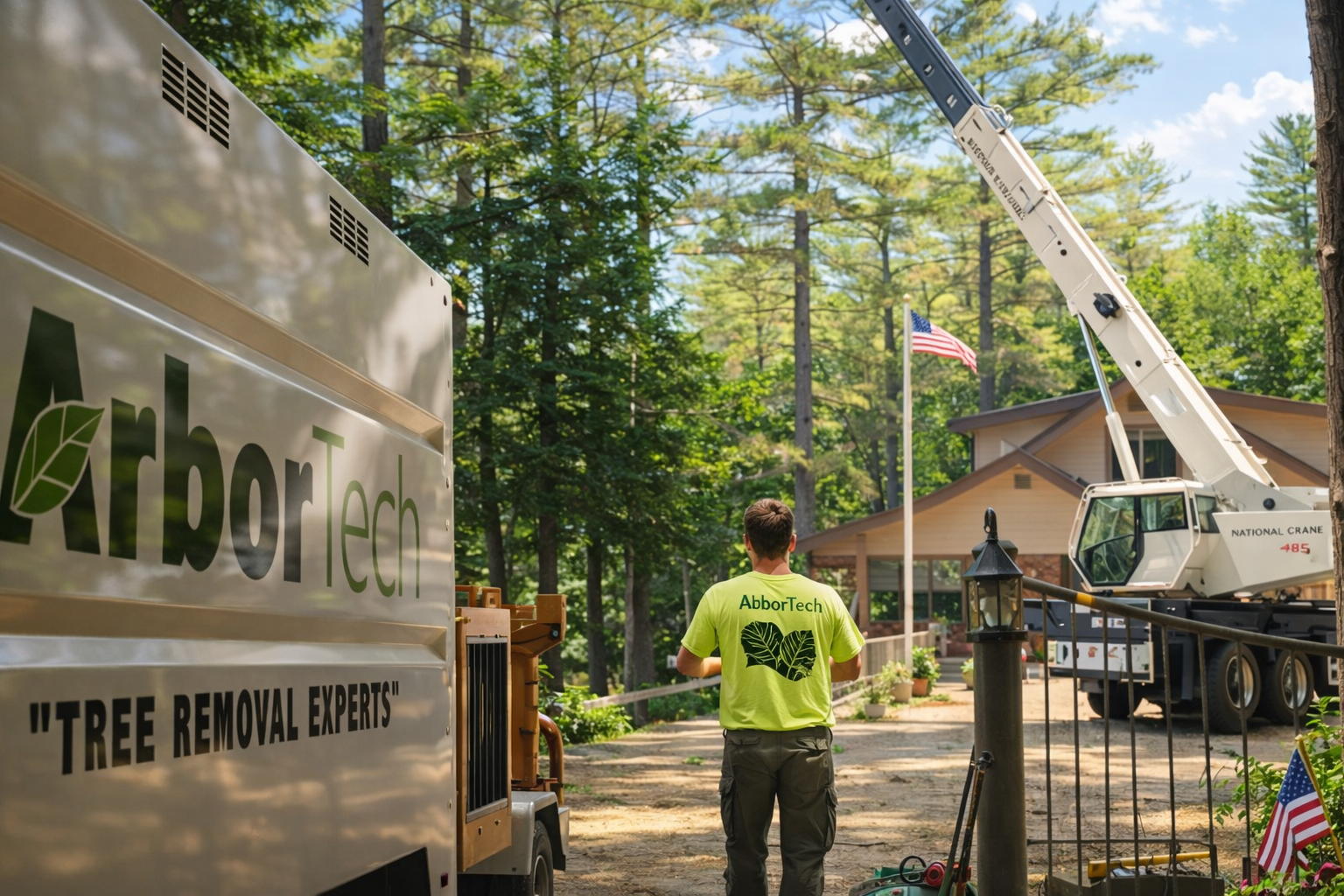
Narrow lakefront access often requires crane assisted work when reduction or removal must protect structures. Mention driveway width and wall openings when scheduling so crews plan rigging before arrival.
ArborTech can assess the union from the ground, talk through pruning options, and flag when removal or crane work makes more sense for your lot.
Shoreland and sequencing with other summer work
Buffer rules still apply when fork work removes significant material on regulated waterfront. Review shoreland protection before major clearing tied to vista goals.
Handle cracked or included-bark forks ahead of cosmetic mulch or view tweaks. Our shoreline priority guide sorts storm follow-up, clearance, cultural, and vista work when budgets compete.
Pair fork review with path clearance articles when low limbs and weak unions sit on the same route to the dock. Read lakefront path clearance for headroom issues separate from fork strength.
Properties in Gilford, Meredith, and Laconia share open fetch and tight staging windows. Early season visits often beat the busiest weeks on Winnipesaukee when crane crews and chip trucks are harder to schedule.
Summary
Co-dominant stems, included bark, and tight V unions are readable from the ground with photos and a slow walk. Treat cracked or leaning forks toward daily use areas as real planning priorities, not something to put off until next year. Use selective pruning when unions are sound, and compare removal or crane work when attachment is compromised. Shoreland context and clear photos shorten the first arborist visit across Lakes Region waterfront lots.
Unsure About a Fork on Your Property?
We assess unions from the ground and recommend pruning, support, or removal with shoreland awareness.