Spring Wind Before Full Leaves: Pruning and Sail on Lake Properties
The week leaves first appear, crowns catch more wind than bare branches did in March. Late April is a practical moment to address sail and weak wood before summer storms.
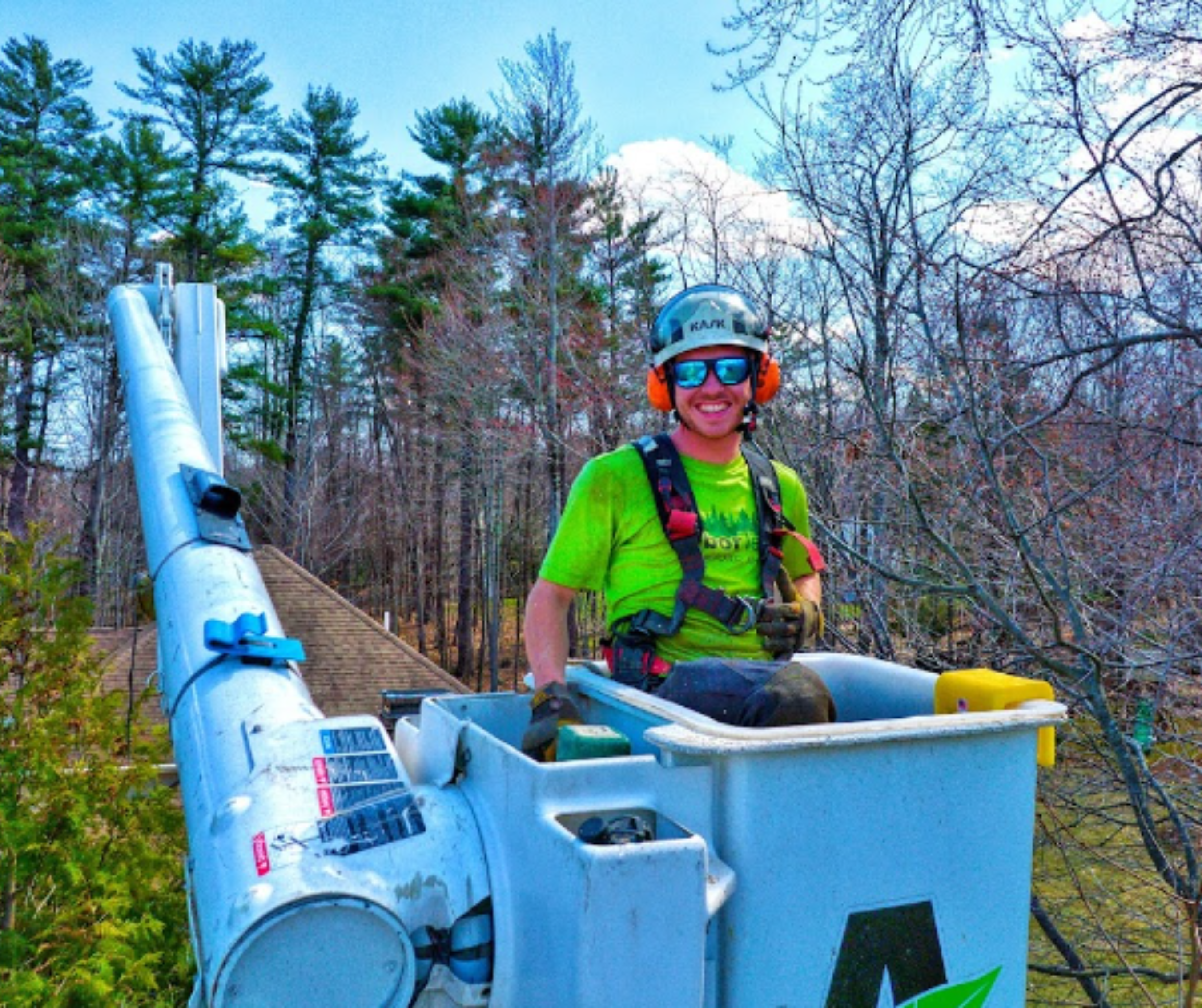
April wind off Winnipesaukee and smaller Belknap County ponds does not wait for your calendar. Trees that stood steady through bare winter weeks begin to move differently once the first leaves unfold. That early leaf sail catches gusts along shorelines and open hillsides where fetch is long and structures sit close to mature crowns.
Late April sits between two useful facts: you can still see major forks and deadwood in many species, and the crown has not yet reached the full sail it will carry in June. That makes it a smart time to plan pruning for weight reduction, clearance, and hazard reduction—not after the first storm proves a weak union cannot hold.
How Early Leaves Change Wind Load
Leaf surface area increases quickly once bud break starts. Even a partially leafed tree presents more resistance than the same tree in March. Branches that flexed mildly in winter may whip at co-dominant forks once foliage acts like a sail. Waterfront trees feel this first because open water delivers steady load from one or more directions.
Watch on a breezy day from a safe distance. Note whether one stem moves independently at a fork, whether deadwood shifts, or whether lean seems to increase compared to photos from early April. Date-stamped pictures help professionals plan a first visit—especially on tight lake lots where staging gets harder in July.
Species That Often Show Early Sail
- Maples and birches with wide horizontal limbs
- White pines with heavy recent growth on exposed sides
- Shoreline trees with crowns weighted toward the water
- Older trees with narrow included-bark unions never corrected when young
Pruning Goals in This Window
Deadwood removal is straightforward and reduces debris before May rains fill beds. Selective thinning and end-weight reduction lower sail while preserving tree health when cuts follow proper standards. This is not topping—indiscriminate heading cuts create weak regrowth and long-term hazard.
Structural work on younger trees still pays dividends. Training a central leader and spacing scaffold limbs is far easier than correcting a mature fork over a driveway. Our guides on structural pruning and April wind and pruning timing go deeper on calendar and technique for northern New Hampshire.
Shoreland and Access Considerations
Waterfront pruning may need to respect buffer rules even when the motivation is safety, not views. Review shoreland protection before major clearing. Late April and early May often offer firmer ground and easier contractor access than midsummer, when parking and paths are crowded with guests and boats.
If removal is the safer choice—decay, root failure, or irreparable structure—plan before peak season. Tight drop zones between house and dock sometimes require crane services. See when to remove a tree if you are weighing options.
Pair Wind Work With Ground Habits
Crown work solves only part of the equation. Mulch piled against trunks, mower damage, and compacted paths to docks weaken trees that already face lake wind. Fix cultural issues in the same season you address sail. Our mulch ring guide and upcoming May checklist articles complement this wind-focused walk.
Pair wind work with ground habits in the same week you watch crown movement. Trees facing lake fetch rarely fail from sail alone—they fail when sail combines with buried flares, mower stripes, and compacted paths. Fixing those habits costs little compared with emergency removal after a July storm splits a fork over the dock.
Summary
Early leaves add wind load fast, especially on open lake lots. Use late April to watch crown movement, photograph weak forks, and schedule professional pruning while structure is still readable. Focus on deadwood, balanced reduction, and clearance over targets—not topping. Factor shoreland rules and summer access into timing. For a visit in Meredith, Laconia, Gilford, or neighboring towns, request an estimate or explore services.
Need Wind Reduction Before Leaves Fill In?
We prune for structure and sail reduction across Belknap County and the Lakes Region.