Full Crowns and Wind on Waterfront Trees in Mid-May
Full leaf crowns catch more wind than bare winter branches. Mid-May is when many waterfront homeowners first notice movement that worries them.
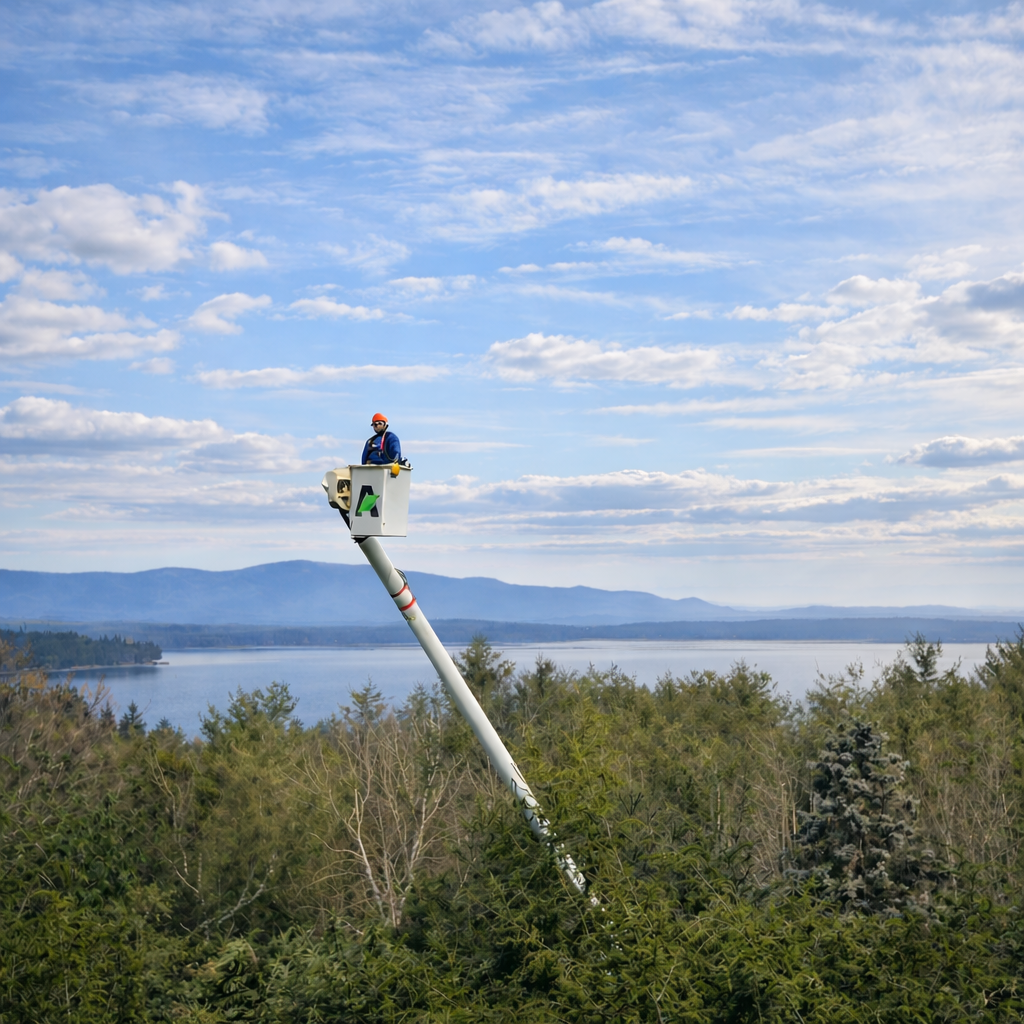
A tree that stood quiet all winter may sway dramatically once mid-May leaves catch the wind off the lake. Some movement is normal. Excessive flex at a single fork, new cracks in bark, or widening gaps in a co-dominant union are not.
Full crowns change how force travels through the tree. Limbs that seemed stiff in April now whip independently. Homeowners often notice this first on waterfront lots where fetch is long and trees grew with asymmetric crowns weighted toward the water. Mid-May is the moment to decide whether that movement is acceptable or a preview of failure.
Leaf Sail in Plain Language
More leaf surface means more force on branches and trunks during steady lake wind and summer thunderstorms. Trees with unbalanced crowns—heavy on the water side, thin inland—experience uneven loading that can split weak unions.
Evergreens add needle surface too. White pines on exposed points may show more sway than maples nearby simply because they never drop foliage. Compare movement between species on your lot before assuming one tree is uniquely dangerous.
Watch For These Movement Patterns
- One stem flexing at a narrow fork while the rest of the crown stays relatively stable
- Repeated contact between branches that rub bark away over time
- Soil disturbance or root plate shift visible after windy days
- Deadwood shifting position in the upper crown
What You Can Check From the Ground
Stand back on a breezy day and watch the upper crown. Note whether one stem moves independently at a fork, whether deadwood shifts, and whether the trunk leans further than it did in April. Photograph anything that changed after recent wind.
Include targets in your photos: roof edges, dock paths, and parking areas. Movement alone does not mandate removal—but movement over daily-use targets raises the priority for professional review.
Evergreens add needle surface too. White pines on exposed points may show more sway than maples nearby simply because they never drop foliage—compare species before assuming one tree is uniquely dangerous.
Professional Options
Crown thinning and reduction pruning, when done correctly, lowers wind load while preserving tree health. Topping is not a substitute—it creates weak regrowth and long-term hazard. For trees that cannot be made safe, plan removal before peak summer traffic limits equipment access.
On regulated waterfront, scope may need to align with shoreland protection. Crane access may apply when drop zones are tight—see crane services.
Related Reading
Pair this with our guides on lake shore wind before summer, spring pruning timing, and co-dominant stems after budbreak. For estimates, clear photos of unions and lean speed the first call.
Repeat your breezy-day observation after the next storm line. Movement that worsens between checks is more urgent than movement that stays consistent from week to week.
Recording Baseline Movement
Take a short video on a breezy day and save it with the date. Comparing clips after future storms shows whether flex at a fork is stable or worsening—useful context when deciding between monitoring and pruning.
Homeowners sometimes mistake normal trunk flex for a failing union. Focus on cracks, widening gaps, and independent stem movement—the patterns that change week to week rather than sway that returns to the same position after each gust.
Across Gilford, Meredith, Laconia, and other Belknap County communities we serve, the same seasonal pattern repeats: full leaves, lake wind, and crowded paths expose clearance and structure problems that looked minor in April. Professional pruning, shoreland-aware planning, and timely contact with photos keep small issues from becoming emergency removals when summer weather arrives.
Summary
Mid-May full crowns turn lake wind into visible motion at forks and weak unions. Watch on breezy days, photograph changes, and separate normal sway from independent stem movement over targets. Correct reduction pruning lowers sail without topping; removal remains the right call when structure or decay cannot be made safe. Act before summer access tightens on waterfront lots.
Branches Moving More Than You Expected?
Send photos of the union and lean—we can advise on pruning or removal.